
Car Insurance Quotes for a Toyota Camry
Are You Getting the Cheapest Car Insurance Available for Your Toyota?
By clicking Start Quote, I agree to the Privacy Policy and Terms of Use, which affect my rights.

Car insurance coverage is essential for you as a Toyota Camry owner—not only to meet your state requirements but also to protect your investment and give you peace of mind. Thousands of satisfied customers have trusted Freeway Insurance to insure their Toyota Camry, benefiting from affordable rates and reliable protection. Insurance companies offer a wide range of coverage options, from liability to comprehensive and collision, all tailored to fit your specific needs and budget. Make sure you choose the right coverage for your Camry at the best possible rate to keep yourself and your vehicle secure.
How Much Is Auto Insurance for the Toyota Camry?
Auto insurance for a Toyota Camry costs an average of about $160 per month for full coverage and around $80 per month for liability coverage. Newer models come equipped with safety features that make it one of the more affordable cars to insure. The cost of your policy depends on several factors that we will explain in this guide, including your age, credit history, and local accident rates. If your ride is financed, your lender is probably requiring full coverage, which means the state-required minimum coverage plus comprehensive and collision.
However, if you own your car outright, your cheapest auto insurance will be the state minimum, which varies from state to state. Liability coverage is required by law in nearly every state and is the least expensive option, costing about 64% to 71% less than full coverage. Coverage options and requirements vary by state, so it’s important to determine your specific state requirements to make sure you have the right protection.
The team of bilingual agents at Freeway Insurance does all the hard work for you, so you can compare insurance quotes side by side from hundreds of top carriers and get exclusive discounts. We always help you find an affordable policy that fits your needs, whether it’s state minimum, liability-only, or full coverage.
Getting a Free Auto Insurance quote with Freeway is easy!
Comparing Insurance Costs for Your Sedan to Other Makes and Models
Policy costs for these sedans differ compared to other similar makes and models based on several factors, including resale value, rate of depreciation, safety features, the cost of parts and labor, and the risk of vehicle theft. Insurance companies use data such as theft rates and accident statistics to determine premiums for different makes and models. Unfortunately, sedans often top the list of the most stolen vehicles in the USA, which can impact insurance rates and coverage considerations.
| Make/Model | Annual Full Car Insurance Coverage |
|---|---|
| Toyota Camry | $1,267 |
| Honda Accord | $2,499 |
| Hyundai Sonata | $2,720 |
| Kia K5 | $2,939 |
| Subaru Legacy | $2,185 |
| Nissan Altima | $2,726 |
Toyotas are well known for lower premiums than competitors thanks to cheaper OEM parts and a slew of safety features, such as pre-collision systems and lane departure assist warnings that do an exceptional job of preventing road accidents.
To save money on car insurance, be sure to compare prices and coverage options from at least three companies for the exact same coverage limits and deductibles—this helps ensure you find the best policy for your needs.
Types of Car Coverage for the Toyota
You have the option of different car insurance coverage options, including full or state minimum, as well as a variety of optional auto coverage types. Car insurance coverage types and limits vary by state, so it’s important to review your state’s requirements. These coverage options can cover a range of risks and needs, such as liability, collision, comprehensive, and even roadside assistance, but are subject to the terms, limits, and conditions of your policy. Most people should buy more than the minimum amount of insurance if they can afford it. We recommend 100/300/100 liability limits as a safer baseline for minimum coverage needs, providing greater protection for your finances and others on the road.
Full Coverage
Full car insurance policies for drivers include liability coverage along with additional protections, such as collision and comprehensive coverage. Collision insurance covers damage to your vehicle resulting from a collision with another vehicle or object, such as a car accident. Comprehensive insurance covers damages due to non-collision-related accidents from natural disasters, falling objects, theft, and vandalism. Both types of coverage can help you file a claim for a wide range of incidents, including situations where you or your passengers are hurt in a car accident—helping pay for medical bills and damages.
All comprehensive and collision claims require a deductible anywhere from $250 to $1,000. Raising your deductible can noticeably lower your monthly premium, but you should only do this if you have an emergency fund to cover what you owe if an accident occurs. Once your deductible is paid out-of-pocket, your insurer covers the rest up to the limits of your policy.
If your car is worth less than 10 times the premium, you may not need collision or comprehensive coverage, and could save money by opting for liability-only. Stacking available discounts, such as bundling insurance or using automatic payments, can also lead to additional savings.
Outside of comprehensive and collision, you can add various options such as roadside assistance, uninsured motorist coverage, and rental reimbursement. Good service is important for quick and easy claims support, so consider insurers that offer 24/7 assistance and helpful customer service.
Don’t be surprised if your lease or loan requires a full policy to better preserve your residual value.
State Minimum Liability
Liability coverage is required by law in nearly every state and pays for bodily injuries and property damage you cause to others. Liability insurance pays for damages you cause as the at-fault driver, including injuries to others and property damage. Bodily injury liability coverage pays for medical bills and other costs related to injuries you cause to others, up to a maximum policy limit—split into a maximum amount paid per person and a maximum amount paid per accident. Experts often recommend 100/300/100 liability limits as a safer baseline for minimum coverage needs.
Property damage liability coverage provides a maximum payment for damages you cause to other vehicles or property, not including your own.
Every driver must buy at least the minimum amount of liability coverage required by their state. These state requirements vary: for example, Arizona drivers must carry a minimum bodily injury of $25,000 per person, $50,000 per accident, and property damage liability of $15,000 per accident. Texas residents are required to carry minimum bodily injury liability coverage of $30,000 per person and $60,000 per accident, along with property damage liability coverage of at least $25,000 per accident.
Liability insurance pays for damage and injuries you cause as the at-fault driver, but does not cover your own injuries or vehicle. Personal Injury Protection (PIP) pays for medical bills and sometimes lost wages for you and your passengers after an accident, regardless of fault. Uninsured or underinsured motorist coverage is a good idea even if not required, and auto insurance agents must offer it in most states. Medical payments coverage can help pay for your medical expenses after an accident, regardless of fault.
Unless the cost of comprehensive and collision exceeds the value of your sedan, you should opt for full coverage over a liability-only policy for greater peace of mind.
Individual Factors That Influence Car Insurance Premiums for a Toyota Camry
Several individual factors can affect the cost of car insurance premiums for a midsize sedan like the Toyota Camry. Insurers use data about your driving history, vehicle, and personal profile to determine your premium. To get a car insurance quote, you will need personal information such as your age and ZIP code. You can get a car insurance quote online in minutes by providing necessary information. You will need to provide details about all drivers and vehicles in your household to get a specific premium amount. Understanding these can help you manage your auto coverage costs effectively:
- Age: Younger drivers, especially teenagers, often face higher premiums due to less driving experience.
- Driving Record: A clean driving record without accidents or traffic violations usually leads to lower insurance premiums. Conversely, past car accidents or tickets can increase premiums.
- Credit History: Many car insurance companies use credit-based insurance scores to help determine premiums, with better credit often leading to lower rates.
- Location: Where you live affects your rates due to factors like local accident rates, theft statistics, and traffic density.
- Vehicle Usage: How often and how far you drive influences your premium. Drivers with lower annual mileage or those who use their car for commuting may qualify for discounts.
- Marital Status: Married drivers often receive lower premiums as they are statistically less likely to be involved in accidents.
- Coverage and Deductibles: The types and limits of coverage you choose, along with your deductible amount, directly impact your premium cost.
- Safety Features: Vehicles equipped with advanced safety and anti-theft features, such as those found on newer Camry models, may qualify for discounts.
- Driving Habits: Insurers may consider your driving habits, sometimes monitored through telematics programs, to adjust rates based on safe driving behavior.
- Employment and School Status: Some insurers offer discounts for certain professions or if you are a student with good grades.
By considering these factors, you can better understand how your personal profile influences your insurance premiums and find ways to potentially reduce your costs.
How Does a DUI Affect Rates for a Toyota Camry?
If you are convicted of a DUI, you will definitely see higher premiums, on top of a suspended license/registration, fines, administrative fees, and possible jail time. Drivers could see their premiums increase by 93%.
With DUI convictions, your insurance company will reclassify you as a higher-risk driver. Some insurance companies may refuse to insure you, but at Freeway, we are partners with top carriers that accept high-risk drivers, so you can trust us to always find an affordable policy. We also offers policies for drivers in both fault and no-fault states, ensuring more options for those needing to insure their vehicles after a DUI.
Expect high premiums for at least three years. Rates vary depending on whether you have a single conviction with an otherwise clean driving record or multiple DUI convictions. Freeway does offer cheap DUI insurance.
Most states require DUI drivers to obtain an SR-22 to prove they are carrying the state’s minimum requirements.
What Are Some Auto Discounts for Toyota?
There are many ways you can save money on your car insurance.
Auto insurance discounts are typically placed into one of four categories: policy, driver behavior, vehicle-based, and affiliation discounts.
Some popular discounts include:

Good driving – Drivers who have demonstrated safe driving behaviors by not being cited or involved in a wreck for 3 to 5 years may qualify for this savings.

Defensive driving – Taking a defensive driving course shows your insurer that you have the intention to learn how to drive safely.

Loyalty – Staying with the same insurer will usually result in a lower premium.

Bundling – Combining two or more policies from the same company results in significant savings. You can save on your premium when you bundle home and auto insurance.
To stay current on the latest discounts offered by your insurer, try calling them every several months to see if you qualify for new discounts. When it is time to renew, don’t forget to compare rates from several carriers. Remember that with Freeway, you can compare in just minutes among hundreds of top providers like Allstate, Progressive, Geico, and many more, so you can simply enjoy the savings we’ll find for you.

Find an office near you to help with your auto insurance
What Are Some of the Characteristics of the Camry?
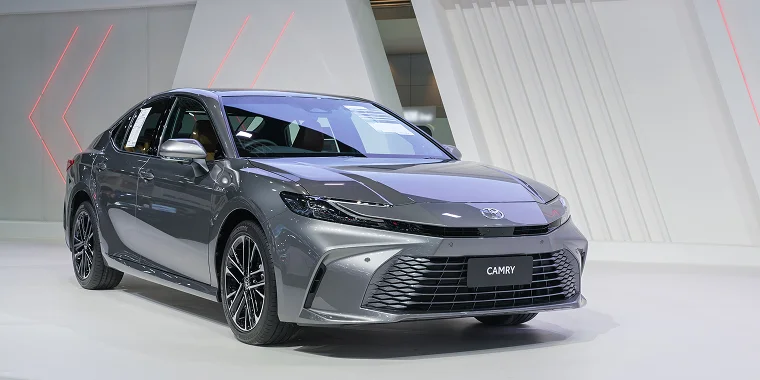
The Toyota Camry has a long history as a reliable and fuel-efficient midsize sedan, evolving over the years to meet changing consumer needs. In recent models, Toyota introduced a hybrid version that combines a gasoline engine with an electric motor, offering improved fuel economy and reduced emissions.
The latest version of the Camry comes in five trim levels: LE, SE, XLE, XSE, and TRD, and offers two engine options: a 203-horsepower four-cylinder and a 301-horsepower V6.
Its entry-level trim, the LE, features an eight-speed automatic transmission and a 203-horsepower 2.5-liter four-cylinder engine. The highest trim level, the TRD, includes a V6 engine and a track-tuned suspension system that adjusts the height to enhance performance. It also comes equipped with a 7-inch touchscreen.
The main competitors are the Honda Accord, Hyundai Sonata, Kia K5, and Nissan Altima.
Getting a Free Auto Insurance Quote with Freeway Is Easy!
Getting a cheap car insurance quote with Freeway Insurance is quick and simple. Ready to find the best coverage for your Toyota Camry? Call us at 800-777-5620 to speak with a friendly bilingual agent who will guide you through the easy process.
You can also get a free quote online anytime or visit an office near you for expert assistance. Whether you prefer to call, click, or come in person, Freeway Insurance makes it convenient to obtain the coverage you need at a great price.