
Cheap Car Insurance in Nebraska: Rates, Requirements, and Coverage Options
By clicking Start Quote, I agree to the Privacy Policy and Terms of Use, which affect my rights.
More Than 200 Companies, All in One Place.





Nebraska Car Insurance at a Glance
Finding affordable car insurance in Nebraska starts with understanding the state’s insurance requirements and comparing policies that fit your circumstances. From Omaha and Lincoln commutes to longer drives through the Sandhills and Panhandle, local driving conditions can influence your insurance decisions.
Reviewing your coverage options and financial priorities can help you balance affordability with protection. Here’s a quick look at Nebraska’s key auto insurance requirements.
| Nebraska Auto Insurance Fact | Detail |
|---|---|
| Financial responsibility | Required under Nebraska law. Acceptable proof includes a certificate of self-insurance, certificate of deposit, bond, property bond, or certificate of insurance |
| SR-22 | May be required after certain suspensions or revocations, including no-proof-of-insurance convictions and some point or court-ordered revocations |
| Minimum liability requirements | 25/50/25 |
| Uninsured/underinsured motorist coverage | $25,000 per person / $50,000 per accident, with higher limits available when requested by the insured in writing |
| Fault system | At-fault state |
Find Affordable Car Insurance in Nebraska
Nebraska drivers have different insurance priorities depending on their daily routines, vehicles, and financial circumstances. You may rely on your car for commuting around Omaha or Lincoln, traveling between smaller communities, or making longer trips across rural Nebraska. Finding affordable protection means considering how important your vehicle is to your household and how much financial risk you’re comfortable managing.
At Freeway Insurance, we understand that every driver’s needs are different. As an independent insurance agency, we work with more than 200 insurance companies to help you compare available options. Our licensed agents offer personalized support, explain your choices, and help you find affordable car insurance that fits your lifestyle and budget.
How Much Is Car Insurance in Nebraska?
Car insurance costs in Nebraska depend on your driving history, vehicle, location, annual mileage, and coverage choices. Deductibles, insurance history, and eligibility for discounts may also affect your premium.
Drivers in Omaha, Lincoln, Scottsbluff, and smaller communities may receive different quotes because local traffic patterns, repair expenses, and claims trends vary. Insurance companies also evaluate driver and vehicle information differently, which can result in different premiums for drivers with similar circumstances.
To compare car insurance costs accurately, request quotes using matching liability limits, uninsured and underinsured motorist coverage, and deductibles. This helps you identify meaningful price differences without overlooking variations in protection.
Getting a Free Auto Insurance quote with Freeway is easy!
Why Auto Insurance Costs Vary Across Nebraska
Nebraska’s driving conditions change considerably based on whether you spend most of your time in urban corridors or rural areas. Insurance companies consider these local factors when determining how much to charge for auto insurance:
- Long rural trips: Drivers in the Panhandle, Sandhills, and rural farming communities may travel long distances on highways with sharp curves and minimal lighting, increasing the risk of crashes.
- Omaha and Lincoln traffic: Omaha and Lincoln are Nebraska’s largest cities, so there are more vehicles using local streets, parking areas, and interchanges. Rush-hour traffic on I-80 and nearby routes can also increase the risk of accidents. Insurance companies consider local traffic patterns when setting their rates.
- Snow and blowing ice: Nebraska has many miles of open highway. During the winter, drivers may encounter slick roads, reduced visibility, and other hazards. Snow may also blow across highways, causing whiteout conditions in a matter of seconds.
- Hail and thunderstorms: According to the National Weather Service, the Omaha area regularly has tornadoes, large hail, damaging winds, and thunderstorms. Severe storms can damage parked cars and reduce visibility while driving.
- Flooding and heavy rain: Water can make roads impassable, which may damage vehicles in low-lying areas. Some areas of Nebraska are susceptible to flash flooding and river flooding, which can create dangerous driving conditions.
Tips for Finding Affordable Car Insurance in Nebraska
Start by getting a quote that reflects the coverage you actually want. Comparing quotes and asking about savings opportunities may help you lower your rate without skimping on coverage.
Why Comparing Quotes Matters
Requesting prices from multiple companies shows how each insurance company weighs different risks. When requesting quotes, keep your liability limits, deductibles, vehicles, and drivers consistent. This makes it easier to perform a side-by-side comparison based on exclusions, payment terms, and available add-ons.
If you’re considering collision and comprehensive coverage, each quote should show the premium and the deductible for each type of claim. Freeway can help you compare your options and determine which quoted policy offers the most protection.
Look for Car Insurance Discounts
Before you start a new policy, find out whether you qualify for any insurance discounts. You may be eligible for one or more of the following savings options:

Automatic payments: Your insurance company may reduce your rate if you agree to sign up for automatic payments.

Defensive driving: Some companies offer lower rates if a policyholder completes an approved defensive-driving course.

Good student: Teens and college students may qualify for grade-based discounts.

Low mileage: You may qualify for a discount if you keep your annual mileage under a certain threshold. This threshold varies by insurance company.

Multi-policy: A multi-policy discount, also known as a bundle discount, may reduce your rate if you pair auto coverage with another type of insurance.

Multi-vehicle: Some insurance companies offer discounts to drivers who insure more than one vehicle on the same policy.

Safe driver: You may qualify for a safe-driver discount if you have no recent tickets or at-fault accidents on your record.
Discounts aren’t automatic, but an agent can check which ones are available and let you know if you’re eligible.
Choose Coverage and Deductibles Carefully
Nebraska’s 25/50/25 liability limits may be used up quickly after a serious accident. This makes it important to compare the cost of insurance against the amount you might have to pay out of pocket.
For collision and comprehensive claims, a higher deductible typically means that you’ll have to pay more after a covered event. We recommend choosing a deductible that you can cover without disrupting your budget. Many lenders require drivers to carry collision and comprehensive coverage, so check your loan requirements before removing any coverage for physical damage.
Bundle Your Insurance
Some companies offer a bundle discount to customers who pair auto insurance with another type of coverage. Before enrolling, compare the cost of bundling against the cost of purchasing separate policies. Bundling isn’t always the cheapest option.
Why Two Nebraska Drivers Can Pay Different Rates
Insurance companies use different methods to set rates, but the most common rating factors include:
- Age: Teens and young adults may pay more for coverage due to their limited driving experience.
- Driving history: Tickets, accidents, and claims can all affect the cost of auto insurance. The impact depends on how many incidents are on your record, when they occurred, and the severity of each one.
- Credit-related insurance scoring: When permitted under Nebraska rules, insurance companies may consider credit-related information when setting rates. Your credit history can affect the cost of maintaining auto coverage.
- Coverage limits and deductibles: The amount of coverage you have affects how much the insurance company has to pay after a covered event. Low limits and high deductibles may reduce your premium, while adding coverage may increase it.
- Location: Where you drive and store your vehicle can affect insurance costs due to differences in traffic, theft patterns, repair costs, and weather conditions.
- Vehicle type: The type of vehicle you have can affect repair costs, discount availability, and theft trends. Insurance companies consider these factors when determining how much to charge for auto coverage.
Nebraska Car Insurance Laws and Minimum Coverage
Nebraska requires drivers to maintain qualifying financial responsibility, most commonly through liability insurance. Applicable auto policies must also include uninsured and underinsured motorist protection. The table below outlines the state’s minimum coverage requirements.
| Required Coverage | Nebraska Requirement |
|---|---|
| Bodily injury liability (per person) | $25,000 |
| Bodily injury liability (per accident) | $50,000 |
| Property damage liability (per accident) | $25,000 |
| Personal injury protection (PIP) | Not required |
| Uninsured motorist (UM) | $25,000 per person / $50,000 per accident |
| Underinsured motorist (UIM) | $25,000 per person / $50,000 per accident |
Bodily Injury and Property Damage Liability
Bodily injury and property damage liability help pay for qualifying injuries and damage you’re responsible for causing to others. Higher limits may help reduce your out-of-pocket expenses after a serious accident.
Uninsured and Underinsured Motorist Coverage
Uninsured motorist (UM) coverage helps address qualifying bodily injuries caused by uninsured drivers, while underinsured motorist (UIM) coverage can provide benefits when the responsible driver’s liability coverage is insufficient. Nebraska policyholders may request higher limits in writing, subject to statutory and insurance company requirements.
Collision and Comprehensive Coverage
Nebraska doesn’t require collision or comprehensive coverage, although lenders may require both. Collision can help pay for covered crash damage to your vehicle, while comprehensive addresses qualifying non-collision events such as hail, theft, flooding, falling objects, and animal strikes. Deductibles generally apply.
Medical Payments and Personal Injury Protection
Nebraska doesn’t require Personal Injury Protection (PIP) or medical payments coverage (MedPay). Optional MedPay can help cover eligible medical expenses for you and covered passengers after an accident, regardless of fault. Available limits and benefits depend on the insurance company and policy.
Proof of Insurance and Financial Responsibility
Nebraska requires proof of financial responsibility for registered vehicles, and drivers must keep acceptable proof available while operating a vehicle. Electronic insurance identification is accepted. Although liability insurance is the most common way to meet the requirement, Nebraska also recognizes certain bonds, deposits, and self-insurance arrangements. Drivers who receive qualifying suspensions may have additional SR-22 filing requirements.

Find an office near you to help with your auto insurance
Minimum Coverage vs. Full Coverage Car Insurance in Nebraska
Nebraska’s minimum auto insurance requirements help address certain accident-related expenses, but they don’t automatically protect your own vehicle against physical damage. Broader coverage can help you manage additional risks. Comparing the two options can help you decide which protections are worth the cost.
Minimum Car Insurance Coverage in Nebraska
A minimum Nebraska liability policy includes 25/50/25 limits, providing $25,000 in bodily injury liability per person, $50,000 per accident, and $25,000 in property damage liability. Applicable auto liability policies also include uninsured and underinsured motorist bodily injury coverage with minimum 25/50 limits.
These protections help address qualifying injuries and damages, but minimum liability insurance generally won’t pay to repair your own vehicle after an at-fault collision. A serious accident could also result in expenses beyond your liability limits.
Full Coverage Car Insurance in Nebraska
Full coverage car insurance typically combines liability insurance with collision and comprehensive coverage. It’s not a separate insurance product defined by Nebraska law, so the exact benefits depend on your policy.
For Nebraska drivers, collision coverage may help after a covered crash on icy highways or rural roads. Comprehensive insurance can address qualifying hail damage, theft, flooding, falling branches, and wildlife collisions.
Lenders or leasing companies may require both coverages for financed vehicles. If you own your car outright, consider its value, potential repair costs, and what you could afford to pay for a replacement before choosing broader coverage.
Driving Without Auto Insurance in Nebraska
Driving without required insurance or other qualifying financial responsibility in Nebraska can result in criminal penalties, suspension of driving and registration privileges, and additional filing requirements.
| Offense | Penalty |
|---|---|
| Operating or allowing the operation of a vehicle without required financial responsibility | Class II misdemeanor; up to $1,000 in fines, six months in jail, or both |
| License and registration consequences after conviction | Driver’s license, vehicle registration, and license plates suspended until reinstatement requirements are satisfied |
| SR-22 following an uninsured-driving conviction | Proof of financial responsibility generally required for three years from the citation or violation date |
| Failure to maintain financial responsibility during the registration period | Class IV misdemeanor with a mandatory penalty that may not be suspended by the court |
| Failure to maintain a required SR-22 | Suspension of driving privileges until financial responsibility and reinstatement requirements are satisfied |
| Reinstatement after a no-proof-of-insurance conviction | Required financial responsibility filing and a $50 DMV reinstatement fee |
Nebraska law allows a citation to be dismissed without cost when the vehicle owner provides acceptable proof within 10 days showing that coverage or other qualifying financial responsibility was active when requested. Buying insurance after the citation doesn’t establish that coverage was active at that earlier time.
If an SR-22 certificate is required, confirm the filing period with the Nebraska DMV and maintain the necessary coverage to avoid additional suspension action.
Car Insurance for Different Nebraska Drivers
Insurance needs vary based on where you live and how you drive. A college student in Lincoln, a family with several vehicles kept in Omaha, and residents traveling in rural areas may want different liability limits or optional coverages. Vehicle financing and the ability to pay a deductible after a covered accident can also affect your insurance decisions.
Freeway can help you compare policies and determine whether you should add roadside assistance, collision and comprehensive coverage, or additional liability protection.
Car Insurance for Drivers With a Clean Record
If you don’t have any recent moving violations or at-fault accidents, you may qualify for additional coverages, insurance companies, or discounts. However, a clean record doesn’t determine the final premium. Your location, vehicle, and coverage selections can also affect pricing.
When comparing quotes, make sure each policy has the same deductibles and limits. This makes it easier to evaluate them fairly. You may want to revisit your policy any time your needs change, such as when you add a driver to your policy or pay off a financed vehicle.
Car Insurance for Young and Teen Drivers
Young people have less experience navigating congested roadways, responding to weather hazards, and avoiding crashes, so they often pay more for coverage than older drivers. If you have a teen driver in your household, you may want to compare the cost of adding them to your policy with the cost of having them purchase separate insurance.
Vehicle choice is another important consideration, as carriers base rates in part on how expensive it is to repair or replace a vehicle after a covered accident. A standard sedan or crossover may cost less to insure than a pickup truck, sports car, or heavily modified vehicle.
Car Insurance After a Ticket or Accident
The impact of a ticket or accident depends on several factors, including what happened and how long ago it occurred. For example, a minor traffic violation from two years ago is likely to affect your premium less than a serious crash within the last six months.
Each insurance company has its own underwriting rules, so the same violation can have a different effect depending on which insurer you choose. You may want to request a policy review before your renewal date, as the impact of a ticket or accident typically fades over time.
Car Insurance for Senior Drivers
Retirement can change how frequently you drive and which insurance protections make sense. Nebraska seniors who no longer commute or travel fewer miles each year may qualify for low-mileage discounts, depending on the insurance company.
Reviewing your coverage periodically can also help you compare deductibles, available discounts, and optional protections as your vehicle and driving routine change.
Car Insurance After a DUI
A DUI conviction in Nebraska can affect your driving privileges, insurance premiums, and eligibility for certain policies. Depending on the offense, reinstatement requirements may include an ignition interlock device, additional insurance certification, or other conditions.
An SR-22 filing may be required following qualifying revocations or suspensions. Compare available insurance options and follow the specific instructions provided by the Nebraska DMV before returning to the road.
Car Insurance After a Lapse in Coverage
A lapse in insurance can affect your insurance options and may create additional problems if you continue driving without required financial responsibility.
If your policy has expired, arrange new coverage before driving. If your license or registration was suspended, confirm whether the DMV requires an SR-22 or other documents before restoring your privileges.
Car Insurance for Multi-Car Households
Nebraska households with multiple vehicles may qualify for discounts by insuring all vehicles with the same company. A combined policy can also simplify billing, renewals, and coverage changes.
Different vehicles may need different protection. A financed SUV may require collision and comprehensive coverage, while an older paid-off car may not need the same optional insurance. Compare the overall household premium before making a decision.
Helpful Car Insurance Guides for Nebraska Drivers
- Auto Insurance FAQs: Get answers to your questions about auto insurance.
- Car Insurance Lapse: What to Do?: Find out what to do after a lapse in state-minimum auto insurance coverage.
- Confused by All the Auto Insurance Options and What You Need?: Learn about how each type of auto insurance may protect you after a covered event.
- How Bundling Insurance Can Help Save Money: Discover how bundling auto insurance with another type of policy may help you qualify for a bundle discount.
- How to File a Car Insurance Claim: Get tips for filing an insurance claim.
- How Weather Events Can Impact Your Auto Insurance: Find out how local weather conditions can affect the cost of your insurance.
- Switching Auto Insurance Providers: Why Freeway Insurance Is the Smart Choice: Learn how Freeway can help you find an auto policy that meets your needs.
- Why Did My Auto Insurance Go Up?: Learn how auto insurers determine rates and why premiums can change.
Frequently Asked Questions About Nebraska Car Insurance
How can I lower my car insurance rate in Nebraska?
Pricing varies based on many factors, but you may be able to lower your car insurance rate in Nebraska by comparing multiple quotes or asking about discount opportunities. Shopping around helps you understand how different carriers weigh each factor, making it easier to compare the value of each option. Although discounts aren’t guaranteed, many insurers offer them to attract new business or reward loyal customers. You may qualify for savings based on your driving record or coverage selections.
Is Nebraska a no-fault or at-fault state?
Nebraska is an at-fault state, also known as a tort state. In at-fault states, the driver who caused an accident is responsible for paying the other party’s expenses. The cost of repairing or replacing a vehicle after a crash can quickly exceed the state’s minimum liability limits. Some drivers account for this risk by purchasing additional coverage.
Does Nebraska require an SR-22 after a DUI?
Nebraska may require an SR-22 after a DUI-related revocation, depending on the revocation and reinstatement requirements. An SR-22 is a certificate that your insurance company files with the state to prove that you have the minimum amount of auto insurance required by law. In Nebraska, any insurance company that submits an SR-22 must have a Signature Authorization Letter on file. The certificate must be presented in person, mailed to the DMV, or submitted electronically.
What is the cheapest car insurance in Nebraska?
Premiums vary by carrier and driver, so the cheapest option depends on your circumstances and insurance company. Purchasing the minimum amount required is enough to get you on the road, but it doesn’t include coverage for physical damage to your vehicle. The minimum liability limits may also be lower than the cost of a serious accident. Compare personalized quotes to evaluate the pricing available to you.
What is the minimum car insurance required in Nebraska?
If you use auto insurance to meet Nebraska’s financial-responsibility requirement, you need state minimum liability insurance and uninsured/underinsured motorist coverage. The minimum limits are $25,000 per person/$50,000 per accident in bodily injury liability, $25,000 per accident in property damage liability, and $25,000 per person/$50,000 per accident in UM/UIM protection.
Does Nebraska require uninsured motorist coverage?
Nebraska requires $25,000 per person/$50,000 per accident in UM/UIM coverage. Insurers must also offer higher UM/UIM limits when requested in writing by a policyholder. UM/UIM coverage may protect you in the event you’re involved in a crash with a driver who has low liability limits or doesn’t have state-minimum liability insurance.
How much is car insurance in Nebraska?
Nebraska car insurance premiums vary based on your driving record, vehicle, location, annual mileage, coverage limits, and insurance company. Deductibles and available discounts can also affect pricing. Comparing personalized quotes with similar coverage can help you estimate your costs.
What happens if I drive without insurance in Nebraska?
Driving without required insurance or other qualifying financial responsibility can result in a Class II misdemeanor, with fines of up to $1,000, six months in jail, or both. Your license and registration may also be suspended, and you may need to maintain an SR-22 filing for three years. The penalties depend on the circumstances and applicable reinstatement requirements.
Is full coverage car insurance required in Nebraska?
No. Nebraska requires financial responsibility, and applicable liability policies include minimum uninsured and underinsured motorist protection. Collision and comprehensive insurance aren’t required by state law, but a lender or leasing company may require them for a financed or leased vehicle.
Sources
- Nebraska Department of Insurance: Auto Insurance Guidebook
- Nebraska Department of Motor Vehicles – No Proof of Insurance Conviction
- Nebraska Department of Motor Vehicles – Insurance Requirements (Proof of Financial Responsibility)
- Nebraska Department of Motor Vehicles – Insurance Cancellation Suspensions
- National Weather Service – Event Summaries
- National Weather Service – Flooding in Nebraska
- Nebraska Department of Motor Vehicles – SR-22 for Revocations/Suspensions
- Nebraska Legislature – Nebraska Revised Statute 60-3,167
- Nebraska Revised Statute 44-7705—Credit Information in Personal Insurance
- Nebraska Revised Statute 44-6408—Uninsured and Underinsured Motorist Coverage
Get Cheap Car Insurance in Nebraska
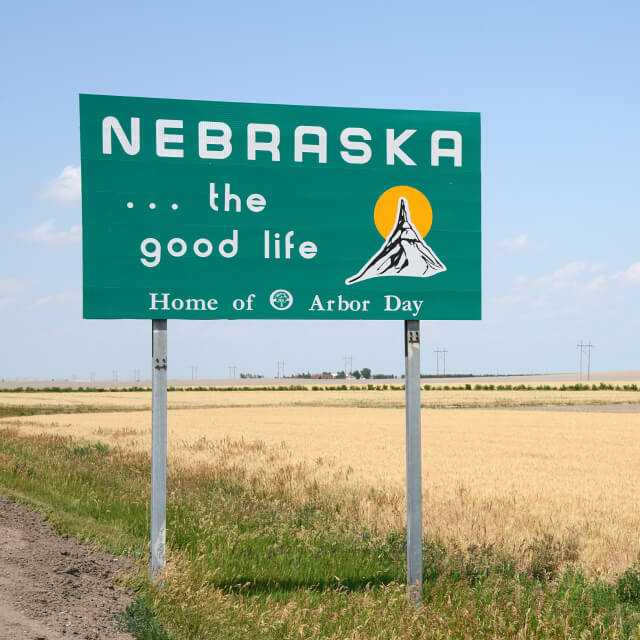
Auto insurance isn’t a one-size-fits-all product. The right coverage depends on many factors, including your age, location, driving history, and vehicle type. Shopping based on price alone doesn’t always tell the full story, so Freeway can help you compare available options and determine which one suits your needs.
Our team can answer questions and help you define your insurance needs. Call 800-777-5620, request an auto insurance quote online, or contact a local Freeway insurance office to find out how we can help you find the right policy for your household.
Auto Insurance Info by City
By clicking Start Quote, I agree to the Privacy Policy and Terms of Use, which affect my rights.
By clicking Start Quote, I agree to the Privacy Policy and Terms of Use, which affect my rights.