
Cheap Car Insurance in New Hampshire: Rates, Requirements, and Coverage Options
By clicking Start Quote, I agree to the Privacy Policy and Terms of Use, which affect my rights.

More Than 200 Companies, All in One Place.





New Hampshire Car Insurance at a Glance
Finding affordable car insurance in New Hampshire starts with understanding the state’s unusual insurance rules and choosing protection that fits your needs. From commuting around Manchester and Nashua to traveling through mountain towns and rural communities, your driving circumstances can influence your insurance choices.
Unlike most states, New Hampshire doesn’t require most drivers to purchase auto insurance, although they can still be financially responsible after an accident. Here’s a quick overview of the state’s key insurance requirements.
| New Hampshire Auto Insurance Fact | Detail |
|---|---|
| Financial responsibility | Most drivers are not required to purchase auto insurance, but they can be held financially responsible after an accident and may later be required to provide proof of financial responsibility |
| SR-22 | May be required after DWI, failing to stop and report an accident, or a second reckless-driving conviction within five years |
| Minimum liability requirements | 25/50/25 if choosing to buy auto insurance |
| Fault system | At-fault state |
Find Affordable Car Insurance in New Hampshire
New Hampshire drivers have flexibility when choosing car insurance, but their needs and financial priorities can differ considerably. You may rely on your vehicle for daily trips around Manchester, regular travel between smaller communities, or longer drives through the White Mountains. Finding affordable protection means considering how you use your car, what matters most to your household, and how much financial risk you’re comfortable managing.
At Freeway Insurance, we understand that there’s no single policy that fits every driver. As an independent insurance agency, we work with multiple insurance companies to help you compare available options. Our licensed agents offer personal support, explain your choices, and help you find affordable coverage that fits your circumstances and budget.
How Much Is Car Insurance in New Hampshire?
The cost of car insurance in New Hampshire depends on your driving history, experience, vehicle, location, coverage limits, and deductibles. Your annual mileage, credit-based insurance score, and available discounts may also influence your premium.
Drivers in Manchester or Nashua may face different rates than those living in rural communities or the Lakes Region. Insurance companies consider factors such as repair expenses, traffic conditions, and claims history when pricing coverage.
To compare car insurance costs accurately, request quotes with matching liability limits, medical payments benefits, uninsured and underinsured motorist coverage, and deductibles. This makes it easier to identify meaningful pricing differences without overlooking variations in protection.
Getting a Free Auto Insurance quote with Freeway is easy!
What Affects Car Insurance Rates in New Hampshire?
New Hampshire has a mix of mountain towns, Seacoast communities, southern cities, and rural highways, each with distinct driving conditions. These local conditions can influence the risk of accidents, explaining why rates and coverage needs vary by location.
- Severe weather: Snow, freezing rain, and icy roads can make winter travel a challenge, especially when temperatures fall below freezing. Heavy rainfall can also cause inland flooding, while ocean storms may affect Seacoast roads and parking areas. The conditions increase the risk of collisions and weather-related vehicle damage.
- Where you drive: In Manchester, Nashua, and Concord, drivers often encounter heavy traffic during peak periods, particularly on I-93 and the Everett Turnpike. Rural areas may have two-lane roads, wooded areas, and more miles between towns. Seasonal visitors also use routes leading to lakes, ski resorts, and leaf-peeping destinations.
- Animal collisions: New Hampshire’s wooded areas are home to deer, bear, moose, and other animals. They can dart into roads, colliding with vehicles or causing drivers to swerve around them.
- Frost heaves: During the winter, some roadways develop frost heaves, natural bumps and cracks in paved surfaces. They’re a result of New Hampshire’s freeze-thaw cycles. A frost heave can cause the road to buckle, increasing the risk of accidents.
How to Get Cheap Car Insurance in New Hampshire
Each insurance company has its own underwriting rules, so a driver can get very different quotes for the same vehicles and coverage. Following the suggestions below may help you uncover savings opportunities in your area.
Compare Car Insurance Quotes
Insurance companies evaluate many factors before issuing a policy, so getting multiple quotes can help you identify the best value. For a fair comparison, choose the same limits, deductibles, and coverage types for each quote. That way, you can determine which insurance companies are charging more for the same coverage. Freeway can help you compare available options.
To get an accurate quote, provide details about the drivers and vehicles in your household. Changes in your driving record, location, or vehicle type can all affect the cost of coverage.
Look for Car Insurance Discounts
Some insurance companies offer discounts, which may help you save money on your premium. Not all companies offer the same savings, but it’s worth asking about these discounts:

Safe driver: Drivers without recent tickets or at-fault accidents may qualify for a discount based on their clean records. Eligibility requirements vary.

Multi-vehicle: You may qualify for a multi-vehicle discount if you put more than one vehicle on the same policy.

Multi-policy: A multi-policy discount may apply if you pair your auto insurance with another eligible policy from the same company.

Low mileage: Some companies offer discounts to drivers who keep their annual mileage under a certain threshold.

Good student: Students may qualify for discounts based on their grades.

Defensive driving: Your insurance company may give you a lower quote if you complete an approved defensive-driving course.

Automatic payments: Your insurance company may offer a discount if you enroll in automatic payments.
The amount of money you can save depends on the insurance company, your driving history, and what type of vehicle you have. Ask us about the eligibility requirements before you enroll.
Choose Coverage and Deductibles Carefully
If you add collision and comprehensive coverage to your policy, you’ll have the opportunity to choose deductibles for each one. A deductible is the amount of money you have to pay before your insurance company starts covering any expenses. Choosing a low deductible can increase your premium but can also leave you with lower out-of-pocket costs after a covered claim.
The same principle applies to liability coverage. Low limits may bring you a lower quote, but you may have to pay more out of pocket if you cause an accident.
Bundle Your Insurance
Placing multiple policies with the same company sometimes results in a lower quote. However, bundling doesn’t always give you the lowest overall price.
Comparing policies, both together and separately, can help you determine whether bundling makes sense. You may find that the discounted auto policy doesn’t offset the higher price of the other coverage.
What Determines Your Car Insurance Rate in New Hampshire?
Many factors determine your car insurance rate, which is why two people can get very different quotes from the same insurance company. Insurance companies often consider these factors:
- Driving experience: Experienced drivers may pay less than teens and young adults, as they’ve had more practice avoiding collisions and responding quickly to roadway hazards. It’s common for premiums to vary through a driver’s lifespan.
- ZIP code: Rates of auto theft and vandalism vary by neighborhood. Instead of looking at your state or county alone, carriers will want to know exactly where you keep your car when you aren’t driving it.
- Driving record: A record free of tickets and at-fault accidents may give you access to additional discounts or coverage options. Your driving history isn’t the only rating factor, however, so your final premium depends on your location, experience level, vehicles, and coverage selections.
- Vehicles: Repair and replacement values, safety features, and accessories can all affect the cost of auto insurance.
- Coverage selections: Your limits and deductibles have a direct impact on the cost of an auto policy, as they affect how much an insurance company has to pay after a covered event.
- Credit-based insurance scores: New Hampshire may allow insurance companies to use consumer credit information when making policy decisions. Payment history, debt amounts, and other credit factors may influence your auto premium.
Car Insurance Requirements in New Hampshire
New Hampshire doesn’t require most drivers to purchase auto insurance, although certain violations and accidents can trigger mandatory financial responsibility requirements. If you choose to buy a policy, it must meet the state’s minimum coverage standards.
| Required Coverage | New Hampshire Requirement |
|---|---|
| Bodily injury liability (per person) | $25,000* |
| Bodily injury liability (per accident) | $50,000* |
| Property damage liability (per accident) | $25,000* |
| Personal injury protection (PIP) | Not required |
| Medical payments coverage | At least $1,000 per person |
| Uninsured motorist (UM) | Required with a motor vehicle liability policy; bodily injury limits generally match the liability limits selected |
| Underinsured motorist (UIM) | Required with a motor vehicle liability policy; bodily injury limits generally match the liability limits selected |
* New Hampshire doesn’t require auto insurance, but these are the minimum limits for drivers who choose to buy policies.
Bodily Injury and Property Damage Liability
Bodily injury and property damage liability help pay for qualifying injuries and property damage you’re legally responsible for causing to others. Higher limits may help reduce your out-of-pocket expenses after a serious accident.
Medical Payments Coverage
New Hampshire requires at least $1,000 per person in medical payments coverage (MedPay) for qualifying private passenger auto policies. MedPay can help pay eligible medical expenses for you and covered passengers following an accident, regardless of who caused it.
The requirement applies to drivers who purchase applicable policies, not every uninsured driver. Higher limits may be available for additional protection.
Uninsured and Underinsured Motorist Coverage
New Hampshire requires uninsured motorist coverage with applicable auto liability policies. This protection can help cover qualifying injuries caused by uninsured or hit-and-run drivers.
The state’s uninsured motorist protections also address certain accidents involving underinsured drivers. Coverage limits generally match the bodily injury liability limits you select, including when you purchase more than the minimum. Policy terms and state law determine the available benefits.
Collision and Comprehensive Coverage
New Hampshire doesn’t require collision or comprehensive coverage, although lenders may require both.
Collision helps pay for covered crash damage to your vehicle, while comprehensive can address qualifying losses involving theft, flooding, falling trees, hail, and wildlife collisions. Both generally include deductibles.
Financial Responsibility and SR-22 Requirements
Although most New Hampshire drivers aren’t required to buy auto insurance, the state may require proof of future financial responsibility after certain convictions or accidents.
An SR-22 filing is one way to establish compliance when the DMV requires insurance certification. The specific filing period depends on the incident, conviction, and reinstatement requirements.
Proof of Insurance
New Hampshire generally doesn’t require drivers who aren’t subject to an insurance filing requirement to carry an insurance identification card.
If you purchase insurance, keeping your insurance information accessible can make accident reporting and claims easier. Drivers who are subject to financial responsibility requirements must maintain the appropriate proof and follow any instructions from the Division of Motor Vehicles.
Minimum Coverage vs. Full Coverage Car Insurance in New Hampshire
Choosing between minimum and full coverage comes down to the protection you want and the expenses you’re prepared to handle yourself. Broader coverage can help pay for damage to your own vehicle, while a minimum policy has more limited protection.
Minimum Car Insurance Coverage in New Hampshire
New Hampshire doesn’t require most drivers to purchase insurance. However, a qualifying minimum auto policy includes 25/50/25 liability limits, at least $1,000 in medical payments coverage, and uninsured/underinsured motorist protection generally matching the bodily injury liability limits.
These protections help address certain injuries and damages, but they don’t automatically pay to repair your own vehicle after an at-fault collision. Choosing not to carry insurance can leave you personally responsible for accident-related expenses.
Full Coverage Car Insurance in New Hampshire
Full coverage car insurance usually combines liability insurance with collision and comprehensive coverage. The term isn’t a standardized policy established by New Hampshire law, and available benefits depend on the insurance company and your selections.
Collision coverage may help pay for covered damage after a crash on an icy mountain road or busy interstate. Comprehensive insurance can address qualifying losses involving fallen trees, hail, theft, flooding, and animal strikes.
Lenders often require comprehensive and collision coverage for financed vehicles. If your vehicle is paid off, consider its value, repair expenses, and how much you could afford to spend on a replacement when choosing coverage.
Penalties for Driving Without Insurance in New Hampshire
Most New Hampshire drivers can legally operate a vehicle without purchasing auto insurance. However, they remain financially responsible for damages they cause, and certain violations or accidents can trigger insurance filing requirements, suspension of driving privileges, or both.
| Situation | Potential Consequence |
|---|---|
| Driving without insurance when no filing requirement applies | No general uninsured-driving fine simply for not purchasing a policy |
| Causing an accident without insurance | Personal responsibility for qualifying damages; the DMV may require security and future proof of financial responsibility |
| Failure to provide security after a qualifying accident | Driver’s license and vehicle registration suspension may apply, subject to statutory procedures and exceptions |
| Certain serious or repeat driving violations | DMV may require proof of future financial responsibility, including an SR-22 |
| Failure to maintain a required SR-22 | Driver’s license or registration suspension may apply until filing and reinstatement requirements are satisfied |
| Outstanding accident-related judgment | Driving and registration privileges may remain suspended until the statutory conditions for restoration are met |
Under New Hampshire’s financial responsibility law, the DMV can require qualifying drivers to demonstrate that they can cover future accident-related liability.
An SR-22 may be required after certain convictions or accident-related actions. Drivers should confirm their filing period and any reinstatement conditions directly with the New Hampshire Division of Motor Vehicles.
Find Car Insurance for Your Driving Needs
Many factors can affect your car insurance options, from age and driving experience to driving record and vehicle type. A driver with a blemish-free record might have access to different options from a driver with a recent DWI or reckless driving charge.
Your insurance needs may also change as you move through different stages of life. Getting a ticket, buying a new car, or adding a teen driver to your policy can all make a difference.
Car Insurance for Drivers With a Clean Record
A clean record may give you more options, but it won’t automatically make you eligible for the lowest rate. Some companies offer safe-driver or claims-free discounts to make costs more manageable.
If you have a clean record, we recommend regular policy reviews. You may need to adjust your limits or deductibles based on changes in your household, such as buying a new vehicle or adding a teen to your policy.
Car Insurance for Young and Teen Drivers
Teens and young adults usually have limited driving experience, so it’s important to review policy terms carefully. Each insurance company has its own underwriting rules, so one company may offer lower rates to young drivers than another company.
If you’re thinking about adding a teen driver to your policy, explore your options carefully. Having them buy their own policy may be the more affordable option for coverage, but it depends on your specific circumstances.
Car Insurance for Senior Drivers
Age can affect your premium, but it’s not the only factor insurers consider when evaluating an application. We recommend reviewing your policy regularly to determine whether you qualify for additional savings.
For example, you may qualify for a low-mileage discount if you started driving less once you retired. Some companies also offer discounts to seniors who complete defensive-driving courses.
Car Insurance After a Ticket or Accident
The same violation can affect two drivers in different ways. This is because insurers use complex formulas to assess risk. The impact of a ticket or at-fault accident varies based on what happened, when it happened, and how severe it was.
For instance, an at-fault accident resulting in serious injuries may have a bigger impact than a speeding ticket. You may want to request new quotes to determine if one carrier weighs the incident less heavily than others.
Car Insurance After a DWI
A driving while intoxicated (DWI) conviction can affect your driving privileges, insurance premiums, and available coverage options. Unlike most New Hampshire drivers, those subject to a DWI-related financial responsibility requirement may need to maintain an SR-22 filing.
If you’re restoring your license after a DWI, follow the DMV’s specific instructions for insurance certification and reinstatement. Comparing quotes may help you find available coverage.
SR-22 Insurance in New Hampshire
An SR-22 isn’t a separate insurance policy. It’s a certificate filed with the state as proof that you maintain the required financial responsibility.
New Hampshire may require an SR-22 after a DWI, certain repeat driving violations, or qualifying accidents. The filing period depends on your circumstances, so confirm the requirements with the DMV before purchasing a policy.
Car Insurance After a Lapse in Coverage
A lapse in car insurance doesn’t automatically violate New Hampshire law for drivers who aren’t required to maintain coverage. However, it leaves you without insurance coverage for accidents that occur during the lapse and may affect future rates or eligibility.
If you’re subject to an SR-22 requirement, a lapse can also create compliance problems and may lead to suspension of driving or registration privileges. Make sure replacement coverage is active before relying on it.
Car Insurance for Multi-Car Households
New Hampshire households with several vehicles may qualify for discounts by insuring them with the same company. A combined policy can also simplify renewals, payments, and coverage updates.
A financed SUV may need collision and comprehensive insurance under the loan agreement, while an older paid-off vehicle may have different coverage needs. Compare the total premium and limits for each vehicle before choosing a policy.
Helpful Car Insurance Resources for New Hampshire Drivers
- Insurance Coverage FAQ: Answers to common questions about finding and managing an auto insurance policy
- Why Every Driver Needs Uninsured Motorist Coverage: Explanation of how UM coverage may protect you if you’re involved in a collision with an uninsured driver
- How to File a Car Insurance Claim: Tips for filing a claim after a covered event
- Why Did My Auto Insurance Go Up?: Reasons why your car insurance may have increased since your last renewal
- Switching Auto Insurance Providers: Why Freeway Insurance Is the Smart Choice: Details on how Freeway can help you compare auto policies and find the right one for your needs
Frequently Asked Questions About New Hampshire Car Insurance
What is the cheapest car insurance in New Hampshire?
The cheapest car insurance depends on your location, driving history, and other unique circumstances. Insurance companies don’t have standard price lists that apply to every driver. Instead, they use complex formulas to calculate the probability of future claims. An insurance company may consider your vehicle, age, ZIP code, driving history, and other factors. As a result, next-door neighbors with similar vehicles might have vastly different premiums.
What is the minimum car insurance required in New Hampshire?
If you choose to buy an auto policy, New Hampshire requires at least 25/50/25 liability coverage, $1,000 per person in medical payments coverage, and uninsured/underinsured motorist coverage matching the bodily injury liability limits. These minimums are simply a starting point. Due to the high cost of vehicle repairs and medical services, you may want to increase your liability limits rather than keeping the minimums. You may also want to add optional coverages, such as collision insurance or roadside assistance.
Is New Hampshire a no-fault state or at-fault state?
New Hampshire is an at-fault state, meaning the driver responsible for an accident may be liable for the resulting damages. The fault rules also affect who can recover money in court. New Hampshire uses a modified comparative fault system, which may allow a driver to recover losses only if they’re found to be 50% or less at fault for a crash.
How can I lower my car insurance rate in New Hampshire?
You may qualify for lower rates by asking for discounts and comparing quotes from multiple insurance companies. Getting more than one quote can help you spot differences in how they rate their policies. Some companies offer discounts based on driver behavior, location, vehicle features, or other criteria, which may help you save money. Not all customers qualify, and not all insurance companies offer discounts, so ask about potential savings before you enroll.
Does New Hampshire require an SR-22 after a DUI?
Yes, a DWI conviction in New Hampshire can trigger an SR-22 requirement. An SR-22 is proof of financial responsibility, not a separate insurance policy. The filing generally lasts three years from the applicable conviction or administrative action. For a second or subsequent DWI conviction, the three-year period begins when the driver becomes eligible for license restoration. Confirm your specific requirement with the New Hampshire DMV.
Can drivers with different driving records get car insurance in New Hampshire?
Yes, it’s possible for drivers with different records to get car insurance in New Hampshire. Freeway works with more than 200 carriers, all with their own underwriting guidelines. They may work with drivers who have clean records, tickets, accidents, DWI convictions, coverage lapses, or other driving histories.
How much is car insurance in New Hampshire?
New Hampshire car insurance rates vary based on your driving history, vehicle, location, experience, coverage limits, and insurance company. Deductibles, credit-based insurance scores, and available discounts may also affect your premium. Comparing personalized quotes with matching coverage can help you estimate your costs.
What happens if you drive without insurance in New Hampshire?
Most New Hampshire drivers aren’t required to purchase auto insurance, so driving without a policy doesn’t automatically result in a fine. However, you can be personally responsible for damages you cause. If the DMV has ordered you to maintain proof of financial responsibility, failing to comply can result in suspension of driving or registration privileges.
Sources
- The State of New Hampshire Insurance Department – Automobile Insurance Consumer Frequently Asked Questions
- The General Court of New Hampshire – Comparative Fault, Apportionment of Damages, and Contribution Among Tortfeasors
- New Hampshire Insurance Department – Understanding How Insurers Use Credit Information
- New Hampshire Division of Motor Vehicles – Insurance Requirements/SR-22 FAQs
- The General Court of New Hampshire – Chapter 264 – Accidents and Financial Responsibility
Get an Auto Insurance Quote in New Hampshire
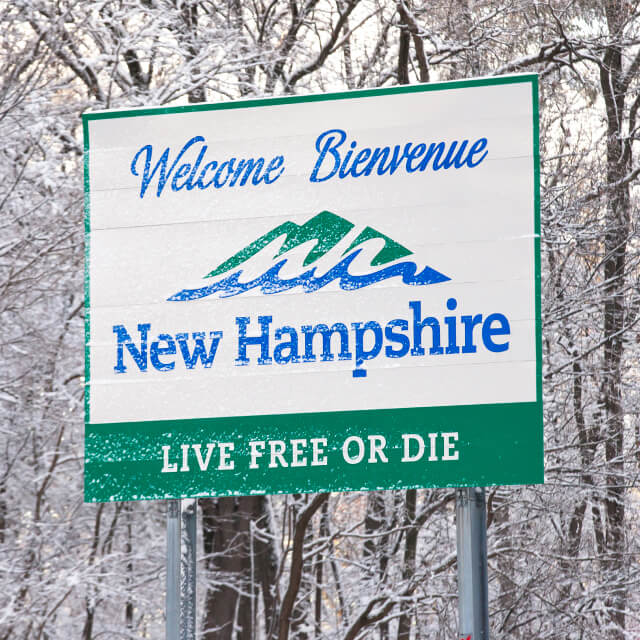
If you choose to buy auto insurance in New Hampshire, price shouldn’t be your only concern. Carriers use different formulas to rate policies based on age, location, vehicle features, and driving habits. Freeway can help you compare quotes based on their limits, exclusions, and deductibles. We’ll also provide information about optional add-ons that might enhance your coverage.
If you’re looking for a basic liability policy or broader coverage options, our team is ready to assist. Request an auto insurance quote online, call 800-777-5620, or contact a local Freeway insurance office to find options that fit your needs.
Auto Insurance Info by City
By clicking Start Quote, I agree to the Privacy Policy and Terms of Use, which affect my rights.
By clicking Start Quote, I agree to the Privacy Policy and Terms of Use, which affect my rights.