Cheap Car Insurance in Idaho: Rates, Requirements, and Coverage Options
By clicking Start Quote, I agree to the Privacy Policy and Terms of Use, which affect my rights.

More Than 200 Companies, All in One Place.





Idaho Car Insurance at a Glance
Finding affordable car insurance in Idaho starts with understanding the state’s requirements and comparing policies that fit your needs. From Boise’s growing suburbs to mountain communities and remote rural highways, driving conditions can influence your insurance choices.
Reviewing your coverage options and financial priorities can help you make an informed decision. Here’s a quick look at the key requirements for Idaho drivers, according to the Idaho Department of Insurance.
| Idaho Auto Insurance Fact | Detail |
|---|---|
| State minimum liability requirements | 25/50/15 |
| Fault system | At-fault |
| Personal injury protection (PIP) coverage | Not required |
| Uninsured/underinsured motorist coverage | Insurers are required to provide under Idaho law; you can refuse this coverage in writing |
| SR-22 requirements | Required for driving without insurance, driving under the influence, reckless driving, and several other convictions |
| Proof of insurance requirements | You must carry paper or electronic proof of liability insurance in your vehicle at all times |
Find Affordable Car Insurance in Idaho
Idaho drivers have different priorities when shopping for car insurance. You may need reliable protection for a family vehicle, affordable insurance for your daily commute, or a policy that suits regular trips through mountain communities and rural areas. Finding the right fit means considering your needs, financial priorities, and how you depend on your vehicle.
At Freeway Insurance, we understand that every driver’s situation is different. As an independent insurance agency, we work with multiple insurance companies to help you explore available options. Our licensed agents provide personalized support, answer your questions, and help you find affordable coverage that fits your lifestyle and budget.
How Much Is Car Insurance in Idaho?
Car insurance costs in Idaho depend on your driving record, age, vehicle, location, coverage limits, and deductible selections. Annual mileage, insurance history, and available discounts may also influence your premium.
Drivers in Boise, Meridian, Idaho Falls, and smaller rural communities may receive different quotes because of traffic patterns, repair costs, and local claims trends. Insurance companies also evaluate these factors differently, so premiums can vary even among drivers with similar circumstances.
To compare insurance costs accurately, request quotes with matching liability limits, uninsured and underinsured motorist coverage selections, and deductibles. This helps you identify meaningful differences in premiums and understand what you’re paying for.
Getting a Free Auto Insurance quote with Freeway is easy!
What Affects Car Insurance Rates in Idaho?
Drivers in Idaho may have different car insurance rates based on location-based factors such as:
- Rural or urban driving: There are more cars on the road in Idaho’s cities, which means that you may need to navigate congestion. If you live in one of the sparsely populated parts of the state, you may encounter quieter roads but longer distances for everyday errands.
- Animal collisions: Idaho averages 1,010 wildlife crashes on highways and interstates each year. Although the state is actively building safer wildlife crossings, it may be worth considering additional insurance coverage if your area has numerous animal crashes.
- Winter weather: When you live in a part of Idaho with severe winter storms, including high-elevation areas, the high winds and heavy snowstorms may lead to more insurance claims. Over time, this can affect rates for local drivers.
- Population growth: Growing communities around Boise and other parts of Idaho can experience increased traffic and changing commuting patterns. More vehicles on local roads may influence accident risks and insurance costs.
Ways to Save on Car Insurance in Idaho
The first car insurance quote you receive may not be the only option. These strategies could help you save money on your insurance.
Compare Car Insurance Quotes
Because every insurance provider determines your risk using their own algorithms, your rates can vary considerably from provider to provider. This can happen when companies weigh risk factors differently or adjust prices based on internal claims data.
Before you choose, take some time to shop around. Get a few quotes from different insurers, making sure to choose the same insurance types, coverage limits, deductibles, and add-ons. You might find that one company offers lower prices for the same coverage.
Look for Car Insurance Discounts
Some insurers offer discounts that can reduce your premiums, though availability and eligibility may vary. Ask your provider about common discounts such as:

Multi-vehicle discount: Adding more than one vehicle to a policy could earn you a discount.

Multi-policy discount: Insurers may give a discount when you buy more than one insurance policy.

Safety features discount: An alarm system, airbags, or other safety features could qualify you for a discount.

Safe driver discount: If your driving record is clean, you might be eligible for savings.

Good student discount: Students with good grades could save on car insurance.

Low-mileage discount: Some providers give discounts if you have low annual mileage.

Autopay discount: Signing up for automatic payment withdrawals sometimes includes a discount.

Paperless billing discount: Some insurers may offer a discount if you enroll in paperless billing.
Choose Coverage and Deductibles Carefully
While a policy with low coverage limits and a high deductible can reduce your premiums, it could increase your out-of-pocket costs after an accident. A minimum-coverage policy might not cover the full cost of the damages, which means you could be responsible for the remaining amount.
Policies with high coverage limits and low deductibles often increase your monthly premiums, but they can reduce your costs after an accident. Opting for broader coverage for things like theft and damage to your vehicle can provide even more financial protection.
Bundle Your Insurance
If you need more than one type of insurance, you may be able to save by buying them from the same insurer. For example, some providers give discounts when you bundle home and auto insurance, though availability can vary. Bundling your insurance also makes it easier to manage your policies because you only need to communicate with one company.
Find an Office Near You in Idaho
- Boise, ID 83705
- Coeur d'Alene, ID 83814
- Nampa, ID 83651
- Nampa, ID 83651
- Nampa, ID 83651
- Twin Falls, ID 83301
What Determines Your Car Insurance Rate in Idaho?
Before an insurance provider quotes you a car insurance rate, they evaluate your risk based on a wide range of data points. The way an insurer weighs this information depends on its underwriting formula, which is the algorithm they use to calculate risk. Idaho state law defines noncredit factors as factors reasonably expected to affect the risk assumed by an insurer.
Factors that affect your car insurance rate in Idaho could include:
- Age: Your age can have a significant impact on your insurance costs. Younger drivers, particularly teens, often have higher rates because they have a higher statistical likelihood of risky driving and filing claims.
- Driving record: If your history is free of traffic violations and other incidents, you may get better rates.
- ZIP code: Where you live could affect your premiums because of factors such as theft rates, local repair costs, and accident rates.
- Vehicle type: Insurers may adjust your rates based on how expensive it is to find parts for your car or the theft statistics for your vehicle type.
- Claims history: Some insurance companies consider how many claims you’ve made in the past when calculating rates. If you’ve never filed a car insurance claim, they may see you as lower-risk.
- Credit-based insurance score: Idaho law allows insurers to use credit factors when setting rates. However, the premium for the highest credit-based rate can’t be more than double the premium for the lowest credit-based rate.
Car Insurance Requirements in Idaho
Here’s a quick glance at car insurance requirements in Idaho.
| Required Coverage | Idaho Requirement |
|---|---|
| Bodily injury liability per person | $25,000 |
| Bodily injury liability per accident | $50,000 |
| Property damage liability | $15,000 |
| Personal injury protection (PIP) | Not required |
| Uninsured motorist (UM) bodily injury coverage | Varies, but typically matches the policy’s bodily injury liability limit (may be refused in writing) |
| Underinsured motorist (UIM) bodily injury coverage | Varies, but typically matches the policy’s bodily injury liability limit (may be refused in writing) |
Bodily Injury and Property Damage Liability
These coverages help pay for eligible injuries and property damage you cause to others. Higher limits may help protect your finances if an accident results in expenses beyond the state minimums.
Uninsured and Underinsured Motorist Coverage
Idaho policies generally include uninsured and underinsured motorist (UM/UIM) coverage unless the named insured rejects it in writing. UM helps cover eligible injuries caused by an uninsured or qualifying hit-and-run driver, while UIM can apply when another driver’s liability insurance is insufficient. Coverage limits and benefits depend on your policy.
How Underinsured Motorist Coverage Works in Idaho
Idaho insurance companies may offer different forms of UIM protection. Excess UIM coverage provides benefits beyond the at-fault driver’s available liability coverage, while difference-in-limits coverage generally reduces the available UIM benefits by amounts recovered from the other driver’s insurance. Ask which type your policy includes before choosing coverage limits.
Collision and Comprehensive Coverage
Idaho doesn’t require collision or comprehensive coverage, although lenders may require both. Collision can help pay for covered crash damage, while comprehensive addresses eligible non-collision losses such as theft, hail, falling objects, and wildlife collisions. Both typically have deductibles.
Proof of Insurance and Verification in Idaho
Drivers must carry valid proof of liability insurance, which can be presented electronically or on paper. Idaho also uses its Drive Insured system to monitor registered vehicles. If coverage isn’t verified for two consecutive months, the DMV issues a warning and provides 30 days to show proof or obtain an exemption before suspending registration. Reinstatement requires proof of insurance and a $75 fee.
Minimum Coverage vs. Full Coverage Car Insurance in Idaho
Choosing between minimum liability and full coverage car insurance involves weighing the cost of a policy against the financial risks you’re willing to take. Idaho’s required liability insurance helps address covered claims involving other people, while broader coverage can help with damage to your own vehicle.
Minimum Car Insurance Coverage in Idaho
Idaho’s minimum liability requirements are commonly expressed as 25/50/15. This provides $25,000 in bodily injury coverage per person, $50,000 per accident, and $15,000 for property damage. Policies also generally include uninsured and underinsured motorist bodily injury protection unless rejected in writing.
Minimum liability coverage can be a more affordable option for drivers who want to meet state requirements. However, it won’t pay to repair your own vehicle after an at-fault collision, and a serious accident could leave you responsible for damages that exceed your liability limits.
Full Coverage Car Insurance in Idaho
Full coverage car insurance typically combines liability insurance with collision and comprehensive coverage. Although Idaho doesn’t require this combination, it can offer broader protection against unexpected vehicle damage.
For drivers traveling icy mountain passes or rural highways, collision coverage may help after a covered crash, while comprehensive coverage can address damage from falling branches, hail, or animal strikes. Policy exclusions, limits, and deductibles still apply.
If your vehicle is financed or leased, the lender may require comprehensive and collision insurance. For a paid-off vehicle, consider its current value, potential repair expenses, and how much you could comfortably spend on a replacement before deciding whether to carry full coverage.
Penalties for Driving Without Insurance in Idaho
Driving without required liability insurance in Idaho can lead to fines, license suspension, and additional insurance requirements. Repeat offenses carry more serious penalties, and the state can also suspend vehicle registration when an insurance lapse remains unresolved.
| Offense | Penalty |
|---|---|
| First offense | $75 fine for a first conviction |
| Second or subsequent offense within five years | Misdemeanor; fine of up to $1,000, up to six months in county jail, or both |
| Driver’s license suspension | Driving privileges may be suspended following a no-insurance conviction |
| SR-22 requirement | Proof of financial responsibility required for one year after a first offense or three years after a second offense within five years |
| Uninsured vehicle registration | Registration may be suspended after two consecutive months without verified coverage and failure to resolve a 30-day warning |
| Registration reinstatement | Proof of insurance and a $75 reinstatement fee required |
Idaho uses its Drive Insured system to verify coverage on registered vehicles. Unresolved insurance gaps can lead to registration suspension, while certain convictions may also require an SR-22 filing. Maintaining continuous coverage and responding promptly to DMV notices can help you avoid additional penalties.
Car Insurance Options for Different Types of Idaho Drivers
The right type of car insurance for you depends on a variety of factors, including your age, driving record, and how you use your vehicle in Idaho. If you commute in heavy traffic to Boise for work, you might select broader coverage and higher limits than if you work from home. And if you have lots of driving experience and no history of insurance claims, you might have different needs than a new driver or someone with several accidents.
At Freeway Insurance, we can help you evaluate the different options to find the one that suits your situation, driving history, and financial protection goals.
Car Insurance for Drivers with a Clean Record
When your driving record is free of moving violations, accidents, and license suspensions, you might be eligible for a wider range of insurance options. If it’s been a while since you reviewed your coverage, you might be able to find discounts or better rates by comparing quotes from different providers. A clean record doesn’t always qualify you for the lowest premium, but it can help you access more deductibles and coverage types.
Car Insurance for Young and Teen Drivers
Teen drivers often present a higher risk for insurance companies because they have less experience behind the wheel. According to the Idaho Transportation Department, teenage drivers are disproportionately involved in serious traffic accidents. As a result, premiums for teens may be more expensive.
One way to manage the costs of car insurance for teens may be to add the driver to a family policy. You might also consider choosing a lower-risk vehicle or asking about discounts for good students or defensive driving courses (where available).
Car Insurance for Senior Drivers
As you get older, you might find that your driving habits and car insurance priorities change. Reviewing your coverage can ensure that your rates reflect your current vehicle usage and annual mileage.
An insurance review may also help you find opportunities to save. Some providers in Idaho might give discounts for completing a defensive-driving program where available.
Car Insurance After a Ticket or Accident
Insurance companies may adjust your premiums after an accident or a ticket. How it affects your rates often depends on factors such as your driving record, who was at fault, and the severity of the incident. The time that’s passed since the accident can also make a difference.
Every insurer considers accidents differently when calculating rates, so the impact can vary. If your premiums are higher, it might be worth shopping around for quotes from multiple carriers.
Car Insurance After a DUI
A driving under the influence (DUI) conviction in Idaho can have a significant impact on your car insurance. Your insurer may raise your premiums, and you may have fewer coverage and carrier options.
Idaho state law also requires you to maintain an SR-22 filing for three years beginning at the conclusion of your DUI suspension period. This means that you’ll need to find an insurance company that’s willing to file an SR-22 certificate on your behalf.
SR-22 Insurance in Idaho
Idaho may require you to have an SR-22 after multiple types of convictions, including:
- Reckless driving
- Driving without insurance
- Driving under the influence (DUI)
- Committing a felony or manslaughter with a vehicle
- Leaving the scene of an accident that causes an injury or death
An SR-22 form isn’t insurance; it’s a document your insurance company files as proof that you meet insurance requirements. Not all carriers offer SR-22s, so you may need to request quotes from multiple companies.
Car Insurance After a Lapse in Coverage
If your car insurance coverage lapses, it could affect your premium and the discounts you qualify for. A history of continuous coverage can also affect your carrier options.
In Idaho, state law requires you to have coverage for any registered vehicle. The state monitors your insurance automatically and warns you if a vehicle is uninsured for two consecutive months.
Car Insurance for Multi-Car Households
Idaho households with multiple vehicles may qualify for a discount by insuring them through the same company. Combining policies can also make it easier to manage payments, coverage changes, and renewals.
Consider each vehicle’s individual insurance needs before choosing coverage. A financed truck may require collision and comprehensive insurance, while an older, paid-off car may not need the same protection. Compare the total household premium and ask your agent about available multi-vehicle discounts.
Helpful Car Insurance Resources for Idaho Drivers
- Factors That Affect Car Insurance Rates: Discussion of factors that could determine your premiums
- Types of Car Insurance: Explanation of common coverages
- Auto Insurance FAQ: Answers to common insurance questions
- Cheapest States for Auto Insurance: Introduction to the 10 cheapest states
- How to File a Car Insurance Claim: Walk-through of the filing process
Frequently Asked Questions About Idaho Car Insurance
What is the minimum car insurance required in Idaho?
Idaho’s minimum required coverage is $25,000 per person and $50,000 per accident for bodily injury liability and $15,000 for property damage liability. You may opt for additional coverage for greater financial protection in the event of more serious damage.
Is Idaho a no-fault or at-fault state?
Idaho is an at-fault state. After an accident, the insurance company may determine who is at fault. Fault can be shared by more than one driver. If there’s a conflict, the issue may need to go to court.
Does Idaho require uninsured motorist coverage?
Idaho doesn’t require uninsured motorist coverage, but it requires insurance companies to provide it. You have the right to reject this coverage. However, you must do it in writing or using an electronic record.
How can I lower my car insurance rate in Idaho?
You may be able to reduce your Idaho car insurance rate by asking about discounts, comparing quotes from different providers, and maintaining a clean driving record. Other options include putting multiple vehicles on one policy or bundling auto insurance with other coverages.
Does Idaho require an SR-22 after a DUI?
Yes, Idaho requires an SR-22 for drivers who are convicted of a DUI. The filing requirement lasts for three years beginning at the end of the DUI suspension period, but conditions may vary.
How much is car insurance in Idaho?
Idaho car insurance rates vary based on your driving record, age, location, vehicle, coverage choices, and insurance company. Your deductible and available discounts can also affect pricing. Comparing personalized quotes with similar coverage levels can help you estimate what you’ll pay.
What is the cheapest car insurance in Idaho?
There isn’t one insurance company that offers the cheapest rates for every Idaho driver. Minimum liability insurance may cost less than broader coverage, but your final premium depends on individual factors and the company’s pricing methods. Comparing several quotes can help you find an affordable option.
What happens if I drive without insurance in Idaho?
Driving without required insurance in Idaho can result in fines, license consequences, and additional proof-of-insurance requirements. A first conviction carries a $75 fine, while a subsequent conviction within five years can bring higher fines or jail time. Idaho may also suspend a vehicle’s registration if a coverage gap remains unresolved.
Sources
- Idaho Department of Insurance – Insurance requirements
- Idaho Transportation Department – Wildlife and vehicles
- Idaho Department of Insurance – Credit factors
- Idaho Transportation Department – SR-22 reinstatement information
- Idaho Transportation Department – Insurance verification and vehicle registration
- Idaho Transportation Department – Driver records and suspensions
- Idaho Legislature – Statutes about uninsured and underinsured motorist coverage
- Idaho Transportation Department – Teen driver crash risk
- U.S. Census Bureau – Population growth estimates
Get an Auto Insurance Quote in Idaho
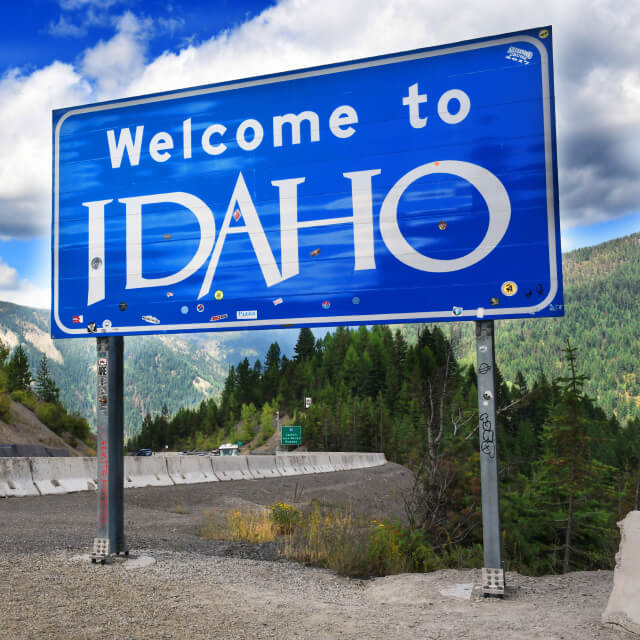
The right car insurance coverage in Idaho can help protect you after an accident, theft, or weather damage. Your choices and rates may vary depending on where you live and other factors, but shopping around doesn’t have to be complicated. The team at Freeway Insurance can help you compare coverage options and understand exactly what each policy includes.
Ready to get started? Request a quote online or call to speak with an agent. You can also stop by the nearest Freeway Insurance office in Idaho.