
Indianapolis Motor Speedway: Why the Brickyard Remains NASCAR’s Most Iconic Crown Jewel
-


- 3+ Years of Insurance Content Experience
- Background in Journalism, Editorial Editing, and Academic Writing
Andrea Perez is a bilingual content writer at Confie, the parent company of Freeway Insurance, where she develops educational and marketing content for multiple insurance…
-
- 13 Years of Insurance Industry and Content Experience
- B.S. in Applied Technology and Performance Improvement, University of North Texas
Rose Carter is an insurance content strategist and marketing executive with 13 years of experience developing consumer-focused insurance education and digital…
-
- 10+ Seasons in the NASCAR Cup Series
- Longtime Freeway Insurance Brand Partner (6+ Years)
Daniel Suárez and Freeway Insurance have been partners for more than 6 years. Daniel is a seasoned force on the track, embarking on his first season with Spire Motorsports and his tenth full-time campaign in the NASCAR Cup Series…
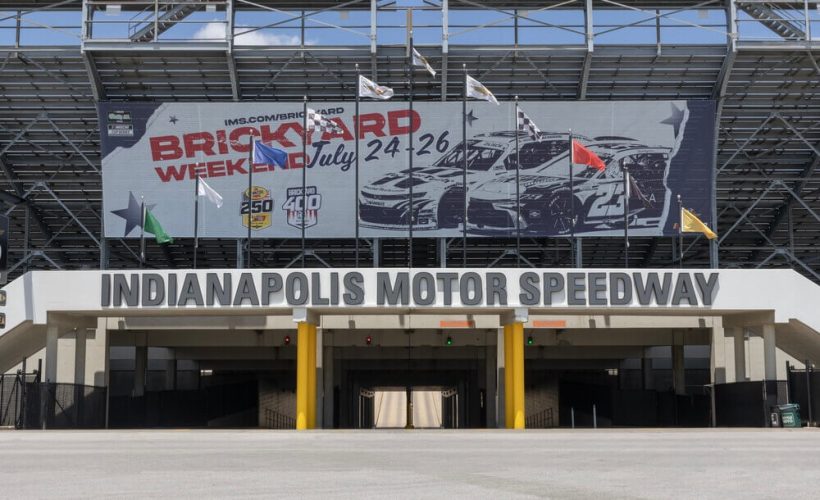
Indianapolis Motor Speedway is more than a racetrack – it is the beating heart of American motorsports. Located in Speedway, Indiana, this 2.5-mile rectangular oval has hosted over 115 years of competition, tested the limits of automotive innovation, and produced some of the most dramatic finishes in racing history. As the only venue to host both IndyCar’s legendary Indianapolis 500 and NASCAR’s crown jewel Brickyard 400, IMS stands alone as the most significant racing site in the world. With the next Brickyard 400 set for July 26, 2026, there has never been a better time to discover why this motor speedway continues to captivate fans, drivers, and the entire motorsports world.
Why Indianapolis Motor Speedway is Considered the Most Iconic Racing Venue in the World
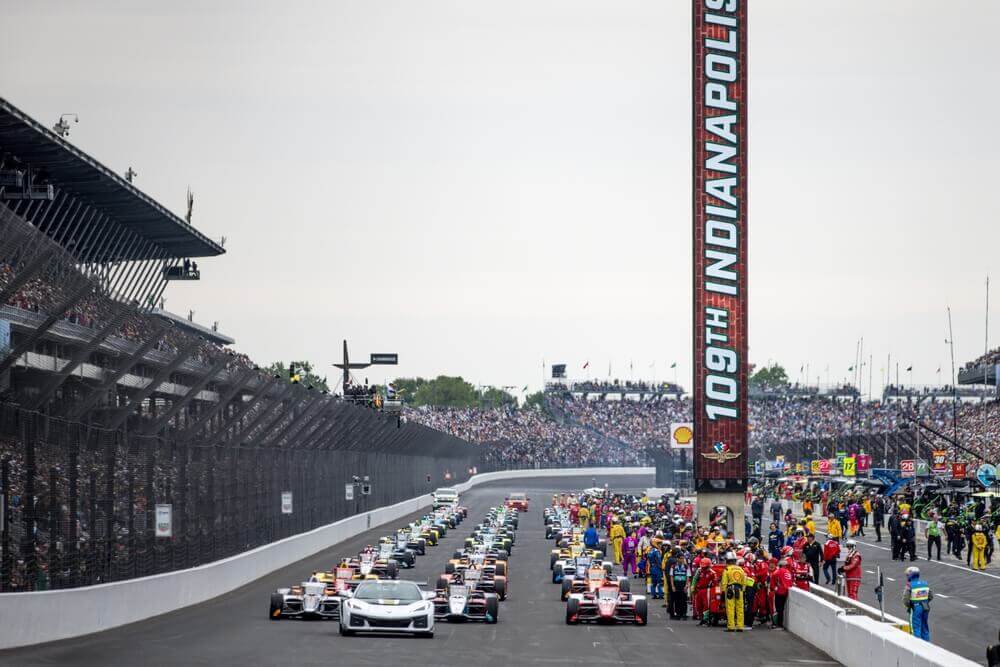
Known as “The Greatest Racecourse in the World” since its founding in 1909, Indianapolis Motor Speedway has earned that title through sheer scale, history, and prestige. The Indianapolis 500, known as “The Greatest Spectacle in Racing,” is considered the largest single-day sporting event globally, drawing crowds that regularly exceed 300,000 spectators on race day. The track features a permanent seating capacity of over 257,325 – making it among the largest sporting facilities ever built.
But capacity alone doesn’t account for the speedway’s status. IMS is the only venue in the world that hosts both IndyCar’s Indy 500 – one leg of motorsport’s prestigious “Triple Crown” – and NASCAR’s Brickyard 400, two crown jewel events that represent the pinnacle of their respective series. The 2.5-mile rectangular oval has challenged every generation of drivers since Ray Harroun won the inaugural Indianapolis 500 on May 30, 1911, at an average speed of 74.602 mph. From open-wheel rockets to thundering stock cars, the track demands mastery of speed, strategy, and nerve in ways no other circuit can match.
Indianapolis itself has long been recognized as a racing capital, and the speedway is its defining landmark – a place where tradition meets innovation and where a single lap around the oval can change a driver’s legacy forever.
The Rich History of Indianapolis Motor Speedway: From 1909 to Present Day
The history of Indianapolis Motor Speedway reads like a timeline of American ingenuity, ambition, and adaptation. Here are the key eras that shaped the track into the icon it is today:
- 1909 – Founding and Construction: Carl G. Fisher, James A. Allison, Arthur C. Newby, and Frank H. Wheeler incorporated IMS on March 20, 1909. The original 328-acre site was farmland purchased for approximately $72,000. The track was originally a testing ground for the automotive industry, and automotive innovations such as rearview mirrors and safety glass were tested at the facility. After an initial surface of crushed stone and gravel proved dangerously inadequate, approximately 3.2 million bricks were laid by hand in the fall of 1909, earning the track its enduring nickname: “The Brickyard.”
- 1911 – The First Indianapolis 500: The first Indianapolis 500 was held on May 30, 1911. Ray Harroun won the inaugural race at an average speed of 74.602 mph, an event that immediately set IMS apart as a proving ground for speed and engineering excellence.
- 1920s–1930s – Speed Milestones and Surface Evolution: Pete DePaolo was the first to average 100 mph in 1925, a milestone that signaled the accelerating pace of motorsports technology. During the 1930s, the brick surface in the turns was paved over with asphalt for the first time, beginning a gradual transition that would continue for decades.
- 1942–1945 – World War II Interruption: The Indianapolis 500 was canceled from 1942 to 1945 due to World War II, one of the few periods the track fell silent.
- Post-War Era – Hulman Family Stewardship: Tony Hulman purchased IMS in 1945, ushering in a period of modernization and growth. The Hulman family’s stewardship would last until 2019, encompassing some of the most transformative years in the speedway’s history.
- 1960s – Rear-Engine Revolution: The arrival of rear-engine cars from British constructors like Cooper fundamentally changed how drivers approached the oval’s four turns. This era proved that IMS rewarded innovation as much as raw horsepower.
- 1961 – The Final Paving: The track was paved over with asphalt in 1961, except for the start-finish line, where a 36-inch strip of original bricks was preserved – creating the now-famous “Yard of Bricks.”
- 1977 – A.J. Foyt’s Historic Fourth Win: A.J. Foyt became the first four-time winner in 1977, cementing his place among the greatest stars to ever race at Indianapolis.
- 2020 – Penske Entertainment Corporation’s Acquisition: In January 2020, Penske Corporation completed its acquisition of IMS, the IndyCar Series, and related entities, beginning a new chapter focused on modernization and fan engagement. In July 2025, Fox Corporation acquired a one-third interest in Penske Entertainment, signaling a major push into media rights and digital growth.
The Brickyard 400: NASCAR’s Premier Event at Indianapolis Motor Speedway
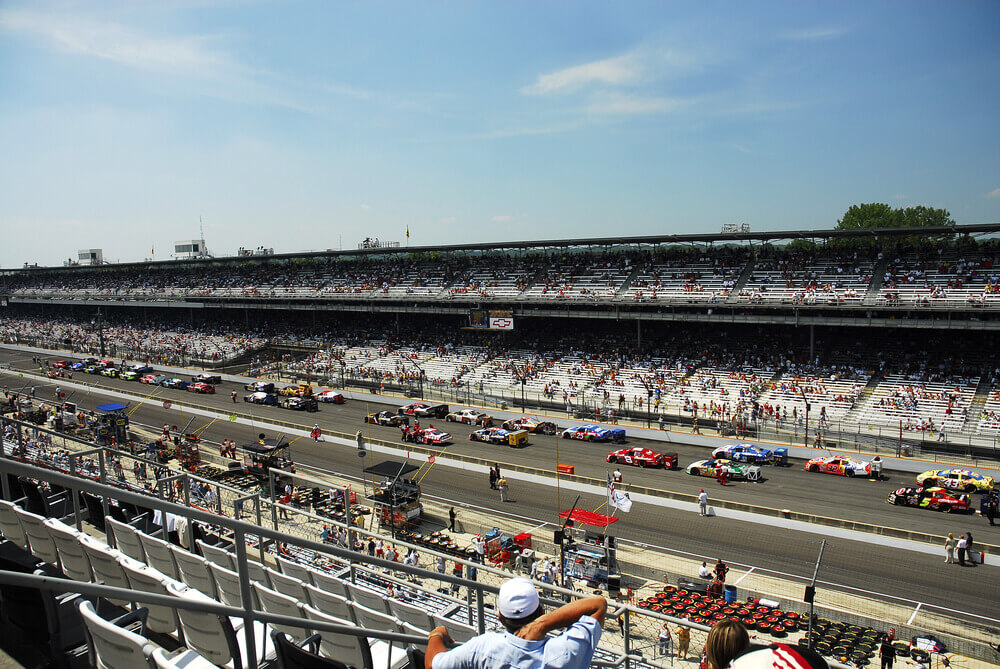
The Brickyard 400 debuted in August 1994 under the vision of Tony George, who recognized that bringing the NASCAR Cup Series to the hallowed grounds of Indianapolis would create something truly special. He was right. The inaugural event drew an estimated crowd exceeding 250,000 spectators, setting attendance records for NASCAR and immediately establishing the race as a crown jewel on the NASCAR Cup Series calendar.
The race at Indianapolis was originally a 400-mile, 160-lap contest on the full oval. That format held from 1994 through 2020, until NASCAR briefly moved to a road course configuration from 2021 to 2023. In 2024, the Brickyard 400 returned to its traditional oval layout, and the results spoke for themselves – more than 70,000 fans attended, marking the first year-over-year attendance increase since 2002. In 2025, attendance held steady at just under 70,000, a sign that momentum is building.
The upcoming July 26, 2026, race continues that tradition as one of the summer’s most anticipated events in all motorsports. As part of how NASCAR seasons are structured, the Brickyard 400 occupies a pivotal spot during the summer stretch – a race where success can define a driver’s entire year.
Memorable Brickyard 400 Moments and Winners
The Brickyard 400 has produced some of NASCAR’s most unforgettable moments and a roster of winners that reads like a motorsports hall of fame:
- Jeff Gordon’s Inaugural Victory (1994): At just 23 years old, Jeff Gordon won the first-ever Brickyard 400, becoming the youngest winner in the race’s history. His emotional triumph helped establish the event as a must-watch for fans and solidified his status as one of NASCAR’s brightest stars. Gordon went on to become the most successful driver in Brickyard 400 history with five wins (1994, 1998, 2001, 2004, 2014), along with records for most laps led, most laps completed, and most top five finishes.
- Dale Jarrett’s Dominance and a New Tradition (1996): Jarrett’s dominant 1996 victory is remembered not just for the racing, but for what happened after. In a spontaneous act, Jarrett walked to the start finish line and knelt to kiss the bricks – creating a tradition that every Brickyard 400 and Indy 500 winner has since followed.
- Jimmie Johnson’s Multi-Win Legacy: Johnson’s victories in 2008, 2009, and 2012 demonstrated sustained excellence at IMS. His 2008 win from pole position was a mark of dominance during his championship era, reinforcing the Brickyard’s reputation as a place where the greatest drivers prove themselves.
- 2024 – Kyle Larson’s Dramatic Oval Return: When the race returned to the oval in 2024, Larson won his first Brickyard 400 in a chaotic finish under yellow that featured NASCAR Overtime, fuel drama, and a heart-stopping restart – reminding everyone why this track produces unmatchable tension.
- 2025 – Bubba Wallace Makes History: On July 27, 2025, Bubba Wallace became the first Black driver to win a major race on the IMS 2.5-mile oval, taking the Brickyard 400 after two overtimes and a masterful fuel strategy that held off Kyle Larson by just 0.222 seconds. It was Wallace’s third career Cup win and a moment of profound cultural and sporting significance.
By the numbers: Hendrick Motorsports leads all teams with 11 Brickyard 400 victories, while Chevrolet holds the manufacturer record with 18 wins.
What Makes Indianapolis Motor Speedway Uniquely Challenging for Drivers
Racing at Indianapolis is unlike anything else on the NASCAR Cup Series schedule, and the track’s unique characteristics are precisely what make it so demanding.
The Flat, Rectangular Design: Unlike steeply banked superspeedways such as Talladega or Daytona, IMS features minimal banking in its four corners – roughly 9 degrees. This means cars cannot rely on gravity and banking angles to carry speed through turns. Instead, drivers must manage higher slip angles, and teams must build setups that balance straight-line speed against corner grip in a way few other tracks demand.
Four Distinct Turns: Each of the four turns at IMS has its own entry and exit geometry. A setup that favors aggressive entry into Turn 1 may sacrifice exit grip heading onto the backstretch. This forces teams to make difficult compromises – there is no “one size fits all” configuration for one lap around the Brickyard.
Tire Wear and Heat: For NASCAR stock cars – heavier, less aerodynamic, and generating less downforce than IndyCars – tire degradation is severe, particularly on the right-side tires. Summer heat races compound the problem, as track temperatures rise through the afternoon, changing grip levels and tire pressures throughout the event.
Fuel Strategy Complexity: Multiple Brickyard 400s have been decided by fuel strategy. The 400-mile distance combined with unpredictable caution periods creates scenarios where leading cars must decide whether to short-pit or gamble on making it to the end. Overtime finishes – as seen in both 2024 and 2025 – add another layer of strategic uncertainty.
Mental Pressure: Perhaps the greatest challenge is psychological. Racing at motorsports’ most prestigious venue, on the same track that hosts the Indy 500, with millions watching – the pressure to perform at IMS is immense. For NASCAR drivers, adding the Brickyard 400 to their résumé is a career-defining achievement.
The Famous Yard of Bricks: Tradition and Significance
No feature of Indianapolis Motor Speedway is more iconic than the Yard of Bricks – a 36-inch strip of original bricks embedded in the asphalt at the start finish line.
In the fall of 1909, approximately 3.2 million bricks, each weighing about 10 pounds, were laid by hand on a two-inch bed of sand with mortar in the joints. These bricks came from multiple Indiana manufacturers and gave the track its beloved nickname. Over the following decades, the brick surface was progressively covered with asphalt – turns in the 1930s, the backstretch by 1939, and finally the remaining sections in 1961, except for that single yard at the start-finish line.
The tradition of “kissing the bricks” started by Dale Jarrett in 1996 has become one of the motorsports’ most recognizable victory celebrations. Whether it’s an IndyCar champion after the Indy 500 or a NASCAR Cup Series winner after the Brickyard 400, kneeling to kiss those weathered bricks is a sign of ultimate achievement. Special commemorative bricks have also been placed in the Yard – in 2019; A.J. Foyt placed a bronze brick to mark his four Indianapolis 500 victories.
The Yard of Bricks serves as a physical connection between past and present. Core samples of the track surface reveal layers of history beneath the modern asphalt – the original bricks, the early tar and gravel, over a century of racing heritage compressed into the ground. Every driver who crosses that strip is, in a very real sense, racing over the same ground that Ray Harroun crossed in 1911.
Modern Era Racing Events and Track Configurations
Indianapolis Motor Speedway hosts far more than its two signature events. The facility has evolved into a year-round motorsports campus that hosts a diverse field of racing series and special events:
- NASCAR Cup Series and Xfinity Series: The Brickyard 400 anchors a full NASCAR weekend at IMS, with support races and activities happening in conjunction with the main event.
- IndyCar Grand Prix: Held since 2014, the IndyCar Grand Prix uses a road course configuration that incorporates portions of the oval and the infield, offering a completely different challenge from the 500-mile oval race.
- Indy Lights Series: The Indy Lights Series began racing at IMS in 2003, providing a development pathway for open-wheel drivers aspiring to reach IndyCar.
- MotoAmerica Championship: The MotoAmerica Championship returned to IMS in September 2019, bringing motorcycle racing back to the speedway’s portfolio.
- IMSA Sports Car Racing: Endurance sports car events have also entered the IMS calendar, showcasing a variety of prototype and GT cars on the road course layout.
- Special Events: IMS hosts vintage racing exhibitions, autonomous vehicle challenges, and community events that keep the facility active and relevant beyond its marquee race weekends.
Visiting Indianapolis Motor Speedway: Tours and Experiences
You don’t need to wait for race day to experience the magic of IMS. Tours are offered select dates from April to October, giving fans multiple ways to explore the speedway’s grounds and soak in its history.
- Kiss the Bricks Tour: This 30-minute experience takes visitors on test laps around the track in a vehicle, with a stop at the legendary Yard of Bricks at the start finish line. It’s the closest most fans will ever come to experiencing the track as drivers see it.
- Victory Podium Tour: Also lasting 30 minutes, this tour takes visitors through Gasoline Alley and the garage area, offering an inside look at where teams prepare their cars and where the sport’s biggest stars walk before they enter the track.
- Golf Cart Tour: For a deeper exploration, the 90-minute driving experience covers the entire facility by golf cart, including areas not accessible on shorter tours.
- Indianapolis Motor Speedway Museum: The on-site museum features an extensive collection of historic race cars, pace car exhibitions, and artifacts spanning the track’s entire history. It’s a must-visit stop for any motorsport’s enthusiast.
- Brickyard Crossing Golf Course: Uniquely, IMS features a golf course with four holes located inside the oval – offering one of the most unusual golf experiences in the world.
A visit to Indianapolis Motor Speedway offers an experience unlike any other venue in sports.
Freeway Insurance: Premier Partner of NASCAR and the Brickyard Experience
As the Official Insurance Partner of the NASCAR Cup Series, Freeway Insurance is proud to be part of crown jewel events like the Brickyard 400. Just as teams at IMS balance risk and reward on every lap – managing fuel strategy, tire wear, and split-second decisions – Freeway Insurance helps everyday drivers navigate their own choices with confidence.
Freeways partnership with NASCAR extends beyond being a sponsor. From supporting drivers like Daniel Suárez to enhancing the fan experience at races across the country, Freeway is driven by the same values that define IMS: tradition, choice, and commitment to excellence.
Whether you’re a racing enthusiast looking for auto insurance coverage or a first-time buyer exploring your options, Freeway Insurance offers affordable policies designed to fit your needs. Visit Freeway online, stop by a local office, or call at 800-777-5620 to get a free quote – just like at the Brickyard, having the right coverage means you can focus on what matters most.
Frequently Asked Questions
When is the 2026 Brickyard 400 NASCAR Cup Series race?
The 2026 Brickyard 400 is scheduled for July 26, 2026. The race is one of NASCAR’s crown jewel events during the summer racing season, occupying a premier weekend slot on the Cup Series calendar. As with any summer event at IMS, weather contingency plans are in place for potential afternoon thunderstorms that are common in Indiana during July.
What makes Indianapolis Motor Speedway special compared to other NASCAR tracks?
IMS stands apart from every other NASCAR track for several reasons. Its flat, rectangular design with minimal banking creates a uniquely demanding challenge unlike the steeply banked superspeedways or short tracks on the schedule. It is the only venue shared by both IndyCar’s Indianapolis 500 and the NASCAR Cup Series. Its history as “The Greatest Racecourse in the World” stretches back to 1909, and the Yard of Bricks tradition at the start finish line connects every modern winner to the track’s origins. No other circuit in the series carries the same weight of heritage and prestige.
Can fans visit the Yard of Bricks year-round?
Fans can visit the Yard of Bricks through various tour packages when the track is not in active use for racing events. The Kiss the Bricks Tour, which lasts 30 minutes, includes direct access to the start finish line where visitors can walk on and photograph the iconic bricks. Tours are offered select dates from April to October. During major race weekends, the museum and facility tours provide alternative ways to experience the speedway’s historic areas.
How does racing at Indianapolis compare between IndyCar and NASCAR?
IndyCar machines are lighter, more aerodynamic, and generate significantly more downforce, allowing them to carry higher cornering speeds through the oval’s flat turns. NASCAR stock cars are heavier with larger bodies and less downforce, which means braking zones are longer, tire degradation is more severe, and setup compromises are more extreme. IndyCar primarily uses the full oval for the Indy 500 and the road course for the Grand Prix, while NASCAR races the 400-mile oval event. Despite these differences, both series consider an Indianapolis victory among the most career-defining achievements in motorsports.
What should first-time visitors know about attending the Brickyard 400?
Arrive early to explore the facility, walk through Gasoline Alley, and experience the pre-race atmosphere that makes IMS special. Consider booking one of the available tours – even the 30-minute options offer unforgettable access to the track and garage area. Prepare for summer heat by bringing sunscreen, water, and light clothing, and be aware that afternoon thunderstorms can cause delays. Plan your transportation in advance, as the speedway draws large crowds and parking fills up quickly. Most importantly, take a moment to stop at the Yard of Bricks – standing on the start finish line at Indianapolis Motor Speedway is an experience that every racing fan should have at least once.