Roadside Breakdowns: Most Common Causes, Prevention Tips, and How Roadside Assistance Helps
-


- 3+ Years of Insurance Content Experience
- Background in Journalism, Editorial Editing, and Academic Writing
Andrea Perez is a bilingual content writer at Confie, the parent company of Freeway Insurance, where she develops educational and marketing content for multiple insurance…
- 13 Years of Insurance Industry and Content Experience
- B.S. in Applied Technology and Performance Improvement, University of North Texas
Rose Carter is an insurance content strategist and marketing executive with 13 years of experience developing consumer-focused insurance education and digital…
- 26 Years of Insurance Experience
- California Licensed Insurance Agent (LIC#0D06734)
Anthony M. Brambila is a licensed California insurance agent with 26 years of experience helping customers navigate their coverage options. He specializes in personal lines…

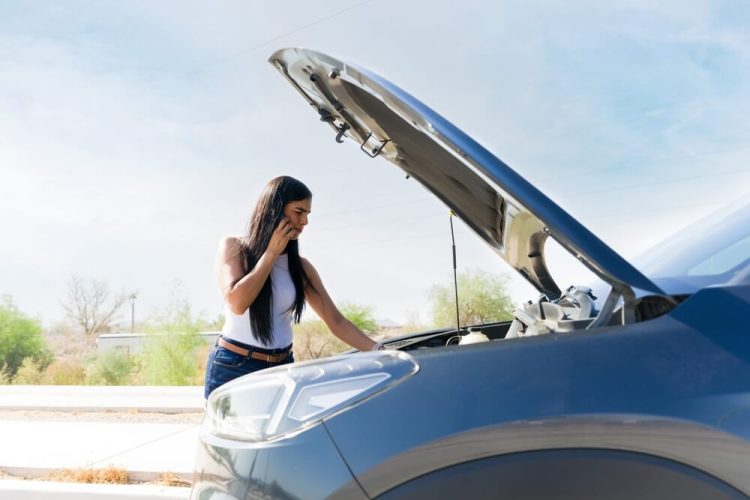
Imagine you’re driving home after a long day when suddenly your car sputters and comes to a halt on the side of a busy highway. The frustration, the uncertainty, and the stress of being stranded are feelings millions of drivers experience every year. Whether it’s a dead battery on a chilly morning or a flat tire during a weekend getaway, roadside breakdowns can disrupt your plans and leave you feeling helpless. That’s where Freeway Auto Club steps in. Our comprehensive roadside assistance service ensures that help is just a call away, providing fast, reliable support to get you back on the road safely and quickly.
This guide explores the most common causes of roadside breakdowns, practical prevention tips, and how Freeway Auto Club’s roadside assistance coverage can be your trusted companion during unexpected car troubles.
Key Takeaways
- Most roadside breakdowns are caused by flat tires, dead batteries, engine overheating, fuel issues, and electrical system failures.
- Simple maintenance habits like checking tires, battery health, fluids, and warning lights can prevent many car breakdowns, especially before summer road trips and holiday weekends.
- Roadside assistance coverage can help with towing, jump starts, flat tire changes, fuel delivery, and lockout support, so drivers aren’t left waiting on the shoulder.
- Older vehicles (10+ years) and neglected maintenance schedules are strongly linked to more frequent and more serious vehicle breakdowns.
- You can compare roadside assistance options with Freeway Insurance online, by phone, or at a local office for quick protection before your next trip.
Understanding Roadside Breakdowns
A roadside breakdown is any sudden vehicle failure that leaves you stopped on the shoulder, stuck in a parking lot, or immobilized in traffic. It can happen to any vehicle, regardless of make or model.
The scale is enormous. In 2025, AAA responded to over 30 million roadside assistance calls across the U.S., with the largest share tied to dead batteries, flat tires, and engine overheating. Breakdowns spike during peak travel periods-Memorial Day, Fourth of July, Labor Day, and Thanksgiving road trips-with summer alone accounting for roughly 8.3 million calls.
Not every breakdown is equal. A minor car breakdown, like needing a jump start, can be resolved roadside. A serious vehicle breakdown-say, a blown head gasket or a seized engine requires a tow truck to haul your car to a repair facility. Vehicles over 10 years old are disproportionately represented in the serious category, with roughly 81% of all towed vehicles falling into that age group.
Below, we’ll walk through the most common reasons vehicles fail, how to prevent each one, and how roadside assistance from Freeway Insurance fits into your overall protection plan.
Most Common Reasons for Roadside Breakdowns
Before diving into each cause in detail, here’s a quick overview of the leading causes that strand motorists every year:
- Flat tires and blowouts – especially on older or underinflated tires
- Dead batteries and charging system failures – worsened by extreme heat or cold
- Engine overheating – caused by cooling system component failures
- Electrical issues – a faulty alternator, blown fuses, or bad wiring
- Fuel problems – running out of gas, contaminated fuel, or a clogged fuel filter
- Neglected maintenance – skipped oil changes, worn belts, low fluids, and old spark plugs
These common reasons share an important thread: most are preventable with regular maintenance. According to CARFAX data from late 2025, roughly 41% of U.S. vehicles are behind on at least one major service item.
You may want to read: 8 Events Where Roadside Assistance Membership Comes in Handy
Flat Tires and Tire Failures
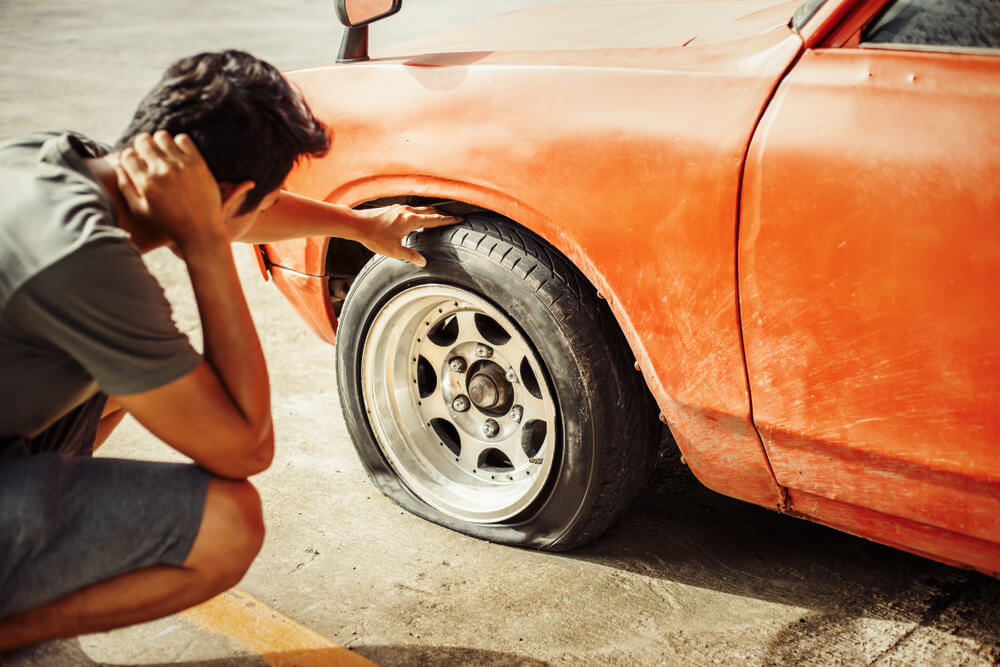
Flat tires and blowouts are among the most visible and frequent roadside breakdowns on U.S. highways. They happen fast, often without much warning, and can leave you stranded in minutes.
Common causes include nails and screws picked up in construction zones, potholes and road debris after winter thaw, curb impacts, consistent underinflation, overloading, and worn tread. Heat also plays a role-hot pavement dries out rubber, increasing blowout risk during summer months.
Many modern cars manufactured since the mid-2010s no longer include a full-size spare tire. Some come with a compact spare or just a tire repair kit, which increases the need for professional assistance when a flat happens.
Prevention tips:
- Check tread depth using the penny test and look for bulges or cracks monthly
- Monitor tire pressure at least once a month-don’t ignore a TPMS warning light
- Rotate tires per your manufacturer’s schedule (typically every 5,000–7,500 miles)
- Replace tires older than 6–7 years, even if they look fine
- Avoid overloading your vehicle on road trips
Roadside assistance helps by changing a flat if you have a usable spare tire, providing air for a slow leak, or arranging a tow to the nearest tire shop if damage is too severe to fix roadside.

Dead Batteries and Charging System Problems
Dead batteries remain one of the most common reasons for a car breakdown, accounting for roughly 30–35% of all roadside assistance calls annually. Extreme temperatures are the biggest culprit-heat accelerates chemical breakdown inside the battery, while cold thickens oil and increases cranking demand.
A typical car battery lasts about 3–5 years. Short city trips, lots of electronic accessories, and leaving interior lights on with the engine off all shorten that lifespan. If your vehicle has been sitting for weeks without driving, expect the battery to be strained.
Warning signs of a failing battery:
- Slow engine cranking or a clicking noise at startup
- Dim headlights or dashboard lights at idle
- Frequent need for a jump start
- A battery warning light on the dashboard
- Visible corrosion on terminals
The battery and the alternator work together in the vehicle’s electrical system. A failing alternator can mimic a bad battery-draining power, dim lights, and even causing the car to stall while driving.
Prevention tips: Test your battery annually after it reaches three years of age. Clean corrosion from terminals, ensure cables are tight, and replace a worn battery proactively rather than waiting for it to leave you stranded. A new battery is far cheaper than an emergency tow.
Roadside assistance helps with jump starts, basic testing of the electrical system, and towing to a repair facility if the charging system has failed completely.
Engine Overheating and Cooling System Failures
Engine overheating is a serious type of vehicle breakdown that can cause permanent engine damage-warped heads, blown gaskets, even complete seizure-if ignored for even a few miles.
The cooling system is made up of several moving parts and components: coolant, the radiator, thermostat, water pump, hoses, serpentine belt, and cooling fans. A failure in any one of these can cause the temperature gauge to climb into the red.
What to do if your engine overheats:
- Turn off the A/C immediately
- Turn the heater on full blast to pull heat away from the engine
- Pull over safely as soon as possible
- Do not open a hot radiator cap-wait for the engine to cool
- Check coolant levels only after the engine has cooled down
Maintenance tips: Flush coolant on the schedule in your owner’s manual, inspect hoses and belts for cracks or swelling, and look for dried coolant stains on your driveway. A summer maintenance checklist can help you catch these issues before they happen.
When overheating makes the vehicle unsafe to drive, roadside assistance can arrange a tow to a trusted repair shop.
Electrical System Failures Beyond the Battery
Most modern cars rely on a complex electrical system that goes far beyond the battery. Wiring harnesses, control modules, fuses, relays, sensors, the starter, and the alternator all work together to keep everything running from the engine to your power windows and dashboard lights.
Common breakdown scenarios:
- An alternator failure that drains the battery and causes the car to stop running mid-drive
- A blown fuse knocking out the ignition or fuel pump
- Corroded or rodent-damaged wiring creating intermittent failures
- A failed crankshaft sensor preventing the engine from starting
Warning signs include flickering headlights, a burning smell from wiring, intermittent stalling, dashboard lights flashing on and off, and repeated fuse failures. DIY accessory installations-aftermarket audio, lighting, and other things wired incorrectly-are a surprisingly common source of electrical problems.
Prevention tips: Have electrical complaints diagnosed promptly by a mechanic, avoid overloading power outlets, and use professional installers for aftermarket stuff.
Many electrical system failures completely immobilize the vehicle and require towing to a shop with diagnostic tools. Roadside assistance coverage typically covers towing after an electrical failure, reducing out-of-pocket cost for drivers.
Fuel Problems and Running Out of Gas
Many drivers assume they’ll never run out of gas, yet fuel issues remain a regular cause of roadside breakdowns. Typical scenarios include misjudging range on long rural stretches, relying too heavily on the “distance to empty” display (which isn’t always accurate), or getting stuck in heavy traffic with a low tank.
Beyond an empty tank, other fuel-related issues can cause the engine to sputter or stall, contaminated fuel from a poorly maintained station, a clogged fuel filter, or a failing fuel pump.
Prevention strategies:
- Refuel when the tank reaches about one-quarter full
- Plan fuel stops on long trips, especially in rural areas
- Avoid habitually driving on “E”
- Replace fuel filters per your maintenance schedule
Most roadside assistance plans provide emergency fuel delivery, enough gas to reach the nearest station. If the vehicle doesn’t restart after fuel is added, the problem may be deeper (mechanical or electrical), and a tow is the next step.
Neglected Maintenance and Wear-Related Failures
Many vehicle breakdowns that seem sudden are actually the result of long-term neglected maintenance. A belt that snaps, a motor that seizes, or a transmission that fails often follows months or years of deferred service.
Commonly overlooked items:
- Engine oil changes and filter replacement
- Transmission and brake fluid
- Coolant flushes
- Spark plugs and air filters
- Serpentine and timing belts
- Hoses and other rubber components
Follow the maintenance schedule in your owner’s manual rather than generic mileage myths. Most modern cars using synthetic oil can go well beyond 3,000 miles between changes; your manual will give the accurate interval for your specific model but use synthetic oil if required by your vehicle manufacturer.
Before long drives, run through a pre-trip inspection focusing on the B-E-T basics: battery, engine and cooling system, and tires. Spending $50–$100 on a pre-trip tune-up is far cheaper than emergency repairs, towing, and a ruined trip.
What to Do Immediately When Your Car Breaks Down
Your safety and your passengers’ safety come first, before worrying about damage to the vehicle.
- Signal and move: Pull to the right shoulder, an off-ramp, or a parking lot. Even driving briefly on a flat is better than stopping in a travel lane.
- Be visible: Turn on hazard lights immediately. Set the parking brake. If you have reflective triangles or flares, place them behind the vehicle.
- Stay inside on busy highways: Keep your seat belt on unless there’s immediate danger like smoke or fire. Exiting on a high-speed road puts you at serious risk from passing traffic. Exiting the vehicle should be done safely using the door furthest from traffic.
- Call for help: Contact roadside assistance or 911. Provide precise location details-mile markers, exit numbers, or nearby landmarks.
- Wait for professionals: Avoid DIY repairs on the traffic side of the vehicle on high-speed roads. Don’t accept rides from strangers. Professional roadside help is worth waiting for.
How Roadside Assistance Coverage Works
Roadside assistance is an optional service that provides help when your vehicle is disabled.
Typical services include:
- Towing to a repair facility within a set mileage
- Jump starts for dead batteries
- Flat tire changes (using your spare)
- Emergency fuel delivery
- Lockout assistance
- Minor on-site mechanical help
Most programs operate 24/7 and can be requested via phone, app, or website-helpful during late-night or out-of-town emergencies. Coverage limits vary: some plans cap the number of service calls per year or limit towing distance, so review your terms before you need help.
Example scenario: You’re driving home from a holiday weekend, and your battery dies at a rest stop. A quick call to your roadside assistance provider gets a technician to your location for a jump start. If the battery can’t hold a charge, they arrange a tow-saving you from an unexpected bill that could easily exceed $150–$300 without coverage.
Get Protected Before and After a Breakdown with Freeway Insurance Auto Club
The combination of preventive regular maintenance and the right roadside assistance coverage offers the strongest protection against being stranded. Don’t wait until your engine is steaming on the highway shoulder.
Get a fast auto insurance and roadside assistance quote with Freeway Insurance before your next road trip. Just give us a call at 800-777-5620, get in-person service at an office close to you, or visit our website.
Frequently Asked Questions About Roadside Breakdowns
How can I tell if my car battery is about to fail before a trip?
Watch for slow engine cranking, dim headlights at startup, electrical accessories cutting out, or a battery warning light on the dashboard. After your battery reaches three years of age, have it load-tested at least once a year-especially before long highway drives or extreme weather seasons. Many auto parts stores and repair shops offer free battery testing during an oil change or routine visit. A successful load test confirms that the battery can still deliver adequate cranking power.
What should I keep in my car emergency kit for roadside breakdowns?
Pack a properly inflated spare tire (if your vehicle has one), jack and lug wrench, jumper cables or a portable jump pack, tire inflator, basic tools, flashlight, reflective triangles, and a first-aid kit. Add comfort and safety items like bottled water, non-perishable snacks, a phone charger, a warm blanket, and a paper list of emergency contacts and your insurance policy number. Drivers who frequently travel in rural areas or harsh winter conditions should also carry a shovel, traction mats, and an ice scraper.
Does roadside assistance cover me if I’m driving someone else’s car?
Coverage rules vary by plan. Some roadside assistance programs follow the vehicle-any driver in that specific car is covered. Others follow the member, meaning you’re covered regardless of which vehicle you’re driving. Check your specific terms or speak with a Freeway Insurance agent to understand whether your coverage applies to you personally or only to certain vehicles. Details like towing distance limits, yearly service calls, and eligible vehicle types also differ between carriers and may affect your warranty of coverage.
Will a roadside breakdown claim raise my auto insurance rates?
Using roadside assistance for a jump start, tow, or fuel delivery is typically handled differently from an at-fault accident claim and generally does not affect premiums in the same way. However, each insurance company has its own rating rules, and frequent usage could be considered in some situations. Ask a Freeway Insurance representative about how your chosen carrier treats roadside assistance claims so you can avoid surprises.
How do I know if I already have roadside assistance coverage?
Review your current auto insurance declarations page – it typically lists optional coverages including roadside assistance, towing, and labor. Also check your vehicle manufacturer’s warranty, credit card benefits, or any stand-alone memberships you may hold.