
What Makes Phoenix Raceway One of NASCAR’s Most Strategic Tracks
-


- 3+ Years of Insurance Content Experience
- Background in Journalism, Editorial Editing, and Academic Writing
Andrea Perez is a bilingual content writer at Confie, the parent company of Freeway Insurance, where she develops educational and marketing content for multiple insurance…
-
- 13 Years of Insurance Industry and Content Experience
- B.S. in Applied Technology and Performance Improvement, University of North Texas
Rose Carter is an insurance content strategist and marketing executive with 13 years of experience developing consumer-focused insurance education and digital…
-
- 10+ Seasons in the NASCAR Cup Series
- Longtime Freeway Insurance Brand Partner (6+ Years)
Daniel Suárez and Freeway Insurance have been partners for more than 6 years. Daniel is a seasoned force on the track, embarking on his first season with Spire Motorsports and his tenth full-time campaign in the NASCAR Cup Series…
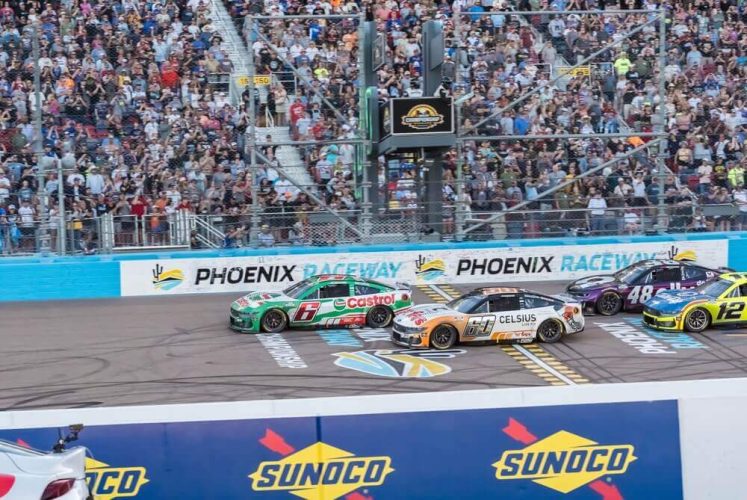
Phoenix Raceway in Avondale, Arizona, has earned a reputation as one of NASCAR’s most challenging tracks. On October 18, 2026, the spotlight turns to the one-mile oval as it hosts the inaugural Freeway Insurance 500.
For NASCAR fans, motorsports enthusiasts, and race attendees who want to understand why racing here looks different from other ovals, this guide has the answers. It breaks down Phoenix Raceway’s design, the strategy it creates, the skills it rewards, how the track has evolved, what to know about the Freeway Insurance 500, and Freeway Insurance’s role as sponsor.
Understanding Phoenix Raceway’s Unique Layout and Challenges
Phoenix Raceway is a one-mile dogleg oval, sometimes called a “D-oval.” Its asymmetrical design sets it apart from nearly every other track on the NASCAR Cup Series schedule. Unlike conventional ovals, where both ends mirror each other, Phoenix features variable banking that forces teams to balance speed and handling in their setups.
Turns 1 and 2 are banked at approximately 9 degrees, while Turns 3 and 4 sit at 11 degrees. The dogleg frontstretch drops to just 3 degrees of banking, and the main backstretch sits at roughly 9 degrees.
These modest banking angles mean the track offers far less aerodynamic grip than high-banked venues. Drivers can’t rely on steep banking to keep the car planted through the corners. Instead, mechanical grip, including suspension tuning, camber settings, and tire stagger, becomes the primary factor.
Every lap demands precision and adaptability, especially through the signature dogleg. The slight kink along what appears to be the frontstretch was originally part of a road course that wrapped around the outside of the oval.
However, the dogleg is what truly sets this raceway apart. During the 2011 reconfiguration, track officials paved the grass apron beneath the dogleg, making it part of the racing surface. Drivers now routinely cut inside the dogleg via pavement that was previously off-limits, creating a section where racing lines diverge dramatically. Some drivers push tight to the inside, while others carry momentum through the wider arc. The result is a section of track where passing opportunities emerge that don’t exist at symmetrical ovals.
Phoenix consistently produces competitive racing because its layout rewards multiple approaches. A car that excels through the tight, low-banked Turns 1 and 2 may struggle through the higher-banked Turns 3 and 4, and vice versa. Teams must balance their setups, since no single car can be perfect everywhere. That keeps the field close and battles ongoing throughout the race.
Comparing Phoenix Raceway’s Key Strategic Elements
Phoenix is one of only three, one-mile tracks on the current NASCAR Cup Series schedule, alongside New Hampshire Motor Speedway (Loudon) and Dover Motor Speedway. Here’s how Phoenix’s key features compare:
| Feature | Phoenix Raceway | New Hampshire | Dover |
| Track Length | 1.0 mile | 1.058 miles | 1.0 mile |
| Banking (Turns) | 9°–11° (variable) | 12° | 24° |
| Layout Type | Dogleg oval (asymmetric) | Modified oval | Concrete oval |
| Frontstretch Width | 62 feet | 60 feet | 54 feet |
| Racing Grooves | Multiple, evolving | Primarily bottom | Bottom-dominant |
| Dogleg Feature | Yes | No | No |
Multiple Racing Grooves, Open Wheel Racing, and Tire Management: The Technical Side of Phoenix Racing
One of Phoenix Raceway’s greatest strengths as a competitive venue is how its surface evolves throughout a race, opening multiple racing grooves that shift dynamics as conditions change.
Early in a run, the bottom groove near the inside wall typically offers the most grip. Rubber hasn’t yet accumulated on the surface, and the shortest path around the track provides an advantage. But as laps accumulate and the track rubbers in, upper grooves and mid-corner lines become increasingly viable. Cars that are patient with their tires can exploit this evolution, finding speed in lanes that were slippery just 30 laps earlier.
Tire management at Phoenix is a constant balancing act. The right-rear and left-front tires absorb significant stress from the dogleg and the track’s asymmetric corners. Teams that carefully manage camber settings and tire pressures can stay competitive during long green-flag runs. More aggressive setups may deliver short-term speed but can wear out the tires faster, leaving drivers with a loose or tight car late in a stage.
The challenge is compounded by the desert climate. Surface temperatures at Phoenix can swing dramatically, particularly during a night race or a late-fall event when the sun drops and temperatures plummet. That temperature shift changes grip levels across the entire track, sometimes mid-race, forcing teams to adapt on the fly through wedge adjustments, air pressure changes, or driver feel and feedback.
Tire failures have become a concern at Phoenix in recent seasons. Low tire pressures, aggressive camber settings, and repeated trips over the dogleg apron can increase the risk during practice and qualifying. At Phoenix Raceway, the line between maximum performance and tire failure is often a narrow one.
Pit Strategy and Late-Race Restarts: Where the Championship Race Is Won and Lost
Phoenix Raceway’s pit road adds another strategic layer that can make or break a race. Lap times are short, typically 26 to 28 seconds during green-flag racing, while the pit entry and exit are relatively long. As a result, a green-flag pit stop can cost more than a full lap, depending on when it occurs. That penalty forces teams to decide whether to pit under green, stretch fuel and tires until a caution, or stay out entirely.
For the Freeway Insurance 500, with stages breaking at laps 60, 185, and the finish at lap 312, those strategic windows are critical. The long second stage of 125 laps almost certainly requires at least one green-flag pit stop, and the timing of that stop can swing positions dramatically. Teams that catch a caution at the right moment gain an enormous advantage, pitting without losing a lap while competitors are trapped on old tires or out of sequence.
Two-tire stops, no-tire stops, and staying out under caution are all common gambles at Phoenix, especially in the final stage. Fresh tires provide more grip but cost valuable track position. Staying out preserves position but leaves drivers vulnerable to competitors on newer tires.
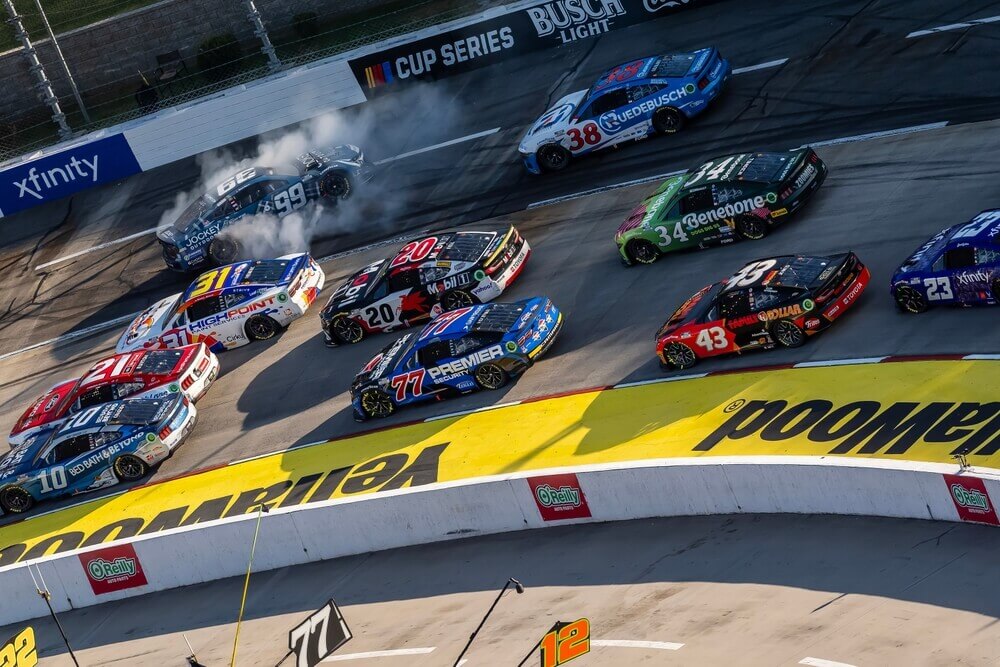
Late-race restarts at Phoenix are among NASCAR’s most volatile and exciting moments, which is a big reason the track served as the Cup Series title venue from 2020 through 2025. The combination of worn tires, a rubbered-up track surface, and the asymmetric layout makes every restart a potential race-defining moment.
Driver Skills Required for Success at Phoenix Raceway
Phoenix Raceway rewards drivers who can adapt quickly and make smart decisions throughout the race.
Its asymmetric layout forces drivers to adjust from corner to corner. Steering, throttle, and braking all change depending on the section of track, especially through the dogleg. Drivers may cut across the apron or take a wider line depending on tire wear, traffic, and track position. That makes technical precision and adaptability especially important.
Restarts also demand strong racecraft. Drivers must launch cleanly, hold their line through the dogleg, and anticipate how competitors will attack. A well-executed restart can quickly change track position.
Patience is just as important. Drivers who push too hard can wear out their tires and lose speed later in a run. The strongest competitors know when to conserve, when to push, and when to take a calculated risk, especially late in the race.
You may be interested in: A Beginner’s Guide to Watching NASCAR Live
Phoenix Raceway’s Evolution: From Desert Track to Championship Venue
The Phoenix Raceway opened on January 4, 1964, at the foot of the Estrella Mountains in Avondale, Arizona. The facility included a one-mile oval, road courses that ran both inside and outside the oval, and a drag strip.
In its early years, Phoenix hosted open-wheel racing, USAC events, and other motorsports. Popular events such as the Copper World Classic drew spectators long before NASCAR arrived. NASCAR held its first race at Phoenix in 1988, marking the series’ debut at the track.
Phoenix Raceway has evolved significantly since its opening in 1964. The track changed ownership several times over the years and was known as Phoenix International Raceway before briefly becoming an ISM Raceway. NASCAR assumed ownership in 2019, and the facility returned to the Phoenix Raceway name.
The most significant changes came in 2011, when the track was repaved and the dogleg was reconfigured to create more racing options and reshape race strategy. In 2018, officials also moved the start-finish line to the exit of Turn 2, changing how restarts and late-race battles unfolded.
Phoenix’s importance continued to grow when it became NASCAR’s championship venue from 2020 through 2025. Although the championship race now rotates beginning in 2026, the track remains one of the sport’s most important stops and continues to host marquee events like the Freeway Insurance 500.
How Freeway Insurance Supports Strategic Racing at Phoenix
Freeway Insurance’s role as the title sponsor of the Freeway Insurance 500 and a Premier Partner of NASCAR reflects the company’s deep commitment to competitive motorsports and the fans who make race weekend events special.
The partnership aligns naturally with Freeway Insurance’s “Your Way” philosophy: the belief that every person deserves choices and flexibility in their coverage, much like every driver and crew chief at Phoenix must choose between competing strategies to find their path to victory. Just as teams weigh the trade-offs of fresh tires versus track position, Freeway Insurance helps customers weigh coverage options to find the right policy for their needs.
As the official insurance partner of NASCAR and NCS driver Daniel Suárez, Freeway Insurance brings its brand to one of the most strategically rich events on the schedule. The Freeway Insurance 500 at Phoenix Raceway showcases skill, strategy, unpredictability, and the thrill of watching competitors push to the absolute edge.
For fans planning to attend the Freeway Insurance 500 or any race weekend event, Freeway Insurance offers coverage options that provide peace of mind on and off the track. Visit a Freeway Insurance office, get a free quote online, or call 800-777-5620 to explore your options.
Frequently Asked Questions About Phoenix Raceway Racing
Why is Phoenix Raceway considered the most strategic track in NASCAR?
Phoenix rewards more than raw speed. Its asymmetrical layout, changing racing grooves, costly green-flag pit stops, and unpredictable restarts force teams to balance car setup, pit strategy, and driver execution. Success depends on putting every piece together.
What makes the dogleg frontstretch so challenging for drivers?
The dogleg gives drivers multiple ways to approach the frontstretch. Some cut across the inside apron to shorten the distance, while others stay higher to carry more speed. The best line depends on tire wear, traffic, and race conditions, making it one of Phoenix’s biggest strategic challenges.
When is the inaugural Freeway Insurance 500 taking place?
The inaugural Freeway Insurance 500 is scheduled for Sunday, October 18, 2026, at Phoenix Raceway. The race is 312 laps (312 miles) with stages at laps 60, 185, and the finish at 312. Freeway Insurance is the title sponsor and a Premier Partner of NASCAR.
How does tire strategy affect race outcomes in Phoenix?
Tire strategy plays a major role in Phoenix. Teams must balance early speed with long-run performance while deciding when to pit and whether to take two tires or four. The right strategy can improve track position and determine the outcome of a race.
What can fans expect from racing at Phoenix Raceway?
Fans can expect close racing, multiple passing opportunities, and strategy that can change the outcome in an instant. Tire management, pit decisions, and late-race restarts often play a major role, making every stage of the race worth watching. The Freeway Insurance 500 continues that tradition at one of NASCAR’s most competitive tracks.