
Cheap Car Insurance in Washington, D.C.
By clicking Start Quote, I agree to the Privacy Policy and Terms of Use, which affect my rights.

More Than 200 Companies, All in One Place.





Shopping for cheap car insurance in Washington, D.C. often comes down to how well your policy matches city driving realities. Frequent stop-and-go traffic, limited parking, and short-trip driving can all affect how insurers price risk. Freeway Insurance helps D.C. drivers compare multiple carriers quickly so it’s easier to find coverage that fits both your budget and your routine.
Auto insurance isn’t optional in the District—drivers must maintain active coverage to legally operate a vehicle. Many people look for affordable auto insurance in D.C. that satisfies Washington, D.C. car insurance requirements while still leaving room in the monthly budget. This article covers average costs, minimum vs. full coverage options, neighborhood price trends, discounts, laws and penalties, and how to get a quote with Freeway Insurance.
Getting a Free Auto Insurance quote with Freeway is easy!
Affordable Car Insurance Options in Washington, D.C.
Washington, D.C. motorists can choose from a range of insurance plans depending on how often they drive and how much financial protection they want. Liability-only coverage keeps monthly payments lower, while expanded policies add collision and comprehensive benefits for vehicle damage and theft. Freeway allows drivers to view multiple carrier quotes in one place, which saves time and removes the need to call several insurers separately. Side-by-side comparisons often reveal price gaps that are not obvious during routine renewals.
Local driving habits and neighborhood risk data influence which policies residents gravitate toward. Someone who drives only on weekends may not need the same structure as a commuter traveling across the city every weekday. Options also exist for low-mileage drivers and those using their vehicles part-time for delivery or rideshare services. Keeping an active policy is not only a legal requirement in the District, but also a practical way to avoid large out-of-pocket repair or medical costs after an accident.
Washington, D.C. Auto Insurance Quick Facts
Before comparing quotes, understanding what makes the D.C. market unique helps you shop smarter. Here are the key factors shaping insurance pricing in the District:
- Traffic congestion and compact city layout contribute to elevated claim activity.
- A noticeable share of uninsured motorists affects how insurers calculate regional risk.
- No-fault regulations shape the types of coverage policies must include.
- Pricing can shift significantly from one ZIP code to another within only a few miles.
Because of these variables, two drivers with similar vehicles can receive very different quotes. Freeway Insurance helps drivers stay legal and protected at a price that fits their budget.
How Much Does Car Insurance Cost in Washington, D.C.?
The average car insurance cost in Washington, D.C. runs higher than the national average due to urban congestion and increased repair expenses. Full coverage car insurance in D.C. averages around $211 monthly, while minimum liability insurance typically starts near $90 monthly for drivers with clean records.
Drivers seeking full coverage often pay more per month, but broader protection can significantly reduce personal financial exposure after an accident. Insurance providers evaluate individualized risk data, meaning actual quotes vary based on driving history, vehicle type, and neighborhood. Comparing multiple carriers through Freeway Insurance remains one of the most reliable ways to identify realistic pricing.
Key Cost Drivers in Washington, D.C.
Several factors push D.C. premiums above national benchmarks:
- Urban congestion and traffic volume: Stop-and-go driving increases fender-benders and claim frequency.
- Higher repair and medical costs: Proximity to major hospitals and urban repair shops adds 15-30% to payouts.
- Uninsured and underinsured driver prevalence: Estimated at 10-15%, requiring robust UM/UIM coverage.
- ZIP-code-level claim trends: Theft, vandalism, and parking exposure vary block by block.
Freeway Insurance agents consider these cost drivers when helping customers find affordable policies that still meet protection needs.
Minimum Coverage vs. Full Coverage Auto Insurance in Washington, D.C.
Most D.C. drivers choose between minimum required auto insurance and more robust full coverage, depending on vehicle value and risk tolerance. Both structures meet legal requirements differently and can leave very different financial outcomes after a covered accident.
Understanding how each option works helps drivers decide whether lower monthly payments or broader protection better fits their situation. Freeway Insurance helps D.C. motorists customize coverage options to balance affordability with adequate protection.
Minimum Required Auto Insurance in Washington, D.C.
Washington D.C. is a no-fault state that requires at a minimum:
- Property Damage Liability: $10,000.
- Third Party Liability: $25,000 per person and $50,000 per accident.
- Uninsured Motorist Bodily Injury: $25,000 per person and $50,000 per accident.
- Uninsured Motorist Property Damage: $5,000 subject to $200 deductible.
D.C. requires liability and uninsured/underinsured motorist coverage. This minimum insurance protects other people and property if you cause an accident, but it does not pay for repairs to your own vehicle.
Drivers relying solely on minimum coverage may face higher out-of-pocket expenses after serious collisions—potentially $5,000 to $15,000 for vehicle repairs alone. Minimum coverage may work for older, lower-value vehicles, but a Freeway Insurance agent can review whether these limits truly match your situation.
Full Coverage Auto Insurance in Washington, D.C.
Full coverage combines liability, collision coverage, and comprehensive protection into one policy. Collision pays for vehicle repairs after a crash with another car or object, while comprehensive covers theft, vandalism, weather events, and animal damage.
Lenders and leasing companies almost always require full coverage in Washington, D.C. until the vehicle is paid off. Drivers who rely on their car daily or own newer vehicles often benefit from this extra security despite the higher premium.
Car Insurance Rates Across Washington, D.C. Neighborhoods
Insurance pricing in the District often changes depending on where you live, not just how you drive. Providers review local accident frequency, vehicle theft reports, and parking exposure when setting monthly premiums. Car insurance rates by neighborhood in Washington, D.C. can look very different even for drivers with similar records.
Estimated Monthly Premium Trends by Neighborhood
| Neighborhood | Estimated Monthly Full Coverage | Estimated Monthly Liability Insurance |
|---|---|---|
| Georgetown | $215 | $108 |
| Foggy Bottom/West End | $225 | $113 |
| Capitol Hill | $238 | $119 |
| Logan Circle/Shaw | $245 | $123 |
| Mount Pleasant/Adams Morgan | $232 | $116 |
| Brookland | $210 | $105 |
These figures represent recent estimated monthly premium trends for typical drivers. Your actual auto insurance quote may be higher or lower depending on individual risk factors. Freeway Insurance can provide personalized quotes tailored to your exact address and driver profile.
Why Car Insurance Rates Differ by Neighborhood
- Traffic density and commuter flow: High-activity areas see more incidents.
- Theft and claim frequency: Some neighborhoods report 2x the city average.
- Parking availability: Street vs. garage exposure adds 10-20% to premiums.
- ZIP-code-based risk modeling: Insurers use five-year claim histories by block.
Even moving a few blocks can affect your rate. Freeway Insurance agents review neighborhood trends to suggest coverage that makes sense for each driver’s location.
Ways to Save on Car Insurance in Washington, D.C.
Many D.C. drivers qualify for car insurance discounts that are not always automatically applied. Taking time to review policy options and eligibility requirements can reveal savings that add up over a full policy term.
Popular Discount Opportunities for D.C. Drivers

Good driver discount: Rewards clean driving records with 15-25% lower rates for 3-5 years without at-fault accidents.

Multi-policy bundle: Combines auto with renters or homeowners insurance for 10-20% savings.

Safety features discount: Vehicles with airbags, anti-lock brakes, alarms, or tracking systems may qualify for lower rates.

Low-mileage discount: Drivers under 7,500 annual miles—common for Metro users—can save 10-30%.
Freeway Insurance reviews discount eligibility for every quote to help keep affordable coverage within reach. Explore additional car insurance discounts to maximize your savings.

Find an office near you to help with your auto insurance
Washington, D.C. Auto Insurance Laws and Penalties
Washington, D.C. enforces strict auto insurance laws, including mandatory minimum coverage and penalties for driving without insurance. Staying compliant protects both your finances and your driving privileges.
Mandatory Minimum Auto Insurance Requirements in Washington, D.C.
D.C. law requires these minimum limits:
- $25,000 bodily injury per person.
- $50,000 bodily injury per accident.
- $10,000 property damage liability.
- $25,000/$50,000 uninsured/underinsured motorist bodily injury.
- $5,000 uninsured motorist property damage.
These amounts satisfy legal requirements but may not fully cover medical expenses or legal defense costs after serious crashes. Many D.C. drivers choose higher limits through Freeway Insurance for stronger financial stability.
Penalties for Driving Without Insurance in Washington, D.C.
Driving uninsured in D.C. carries significant consequences:
- First offense: $150-$300 fines, potential 3-month license suspension.
- Reinstatement fees around $100.
- Repeat violations: $1,000+ fines, vehicle impoundment, SR-22 filing requirements.
These costs often exceed what continuous coverage would have cost. Freeway Insurance helps drivers avoid gaps and quickly reinstate coverage if needed.
What Impacts Car Insurance Rates in Washington, D.C.?
D.C. insurers consider both personal and local factors when calculating your policy premium:
- Driving record and prior violations.
- ZIP code and neighborhood risk trends.
- Vehicle type, age, and safety features.
- Credit history (where permitted).
- Annual mileage and commuting patterns.
- Claims history.
While you cannot control every factor, improving driving behavior and maintaining continuous coverage can gradually lower rates. Freeway Insurance matches D.C. drivers with carriers that treat their profile favorably.
When and How to Report a Car Accident in Washington, D.C.
D.C. drivers should report certain crashes promptly to both authorities and their insurance company to stay compliant and protect their rights. Gather photos, witness contacts, and insurance exchanges at the scene.
Accidents That Should Be Reported in Washington, D.C.
- Accidents involving injuries.
- Accidents with significant vehicle damage.
- Accidents causing property damage to else’s property.
- Hit-and-run incidents.
- Accidents involving uninsured or underinsured drivers.
- Accidents involving government or commercial vehicles.
When in doubt, report the incident. Keep your insurance card accessible—digital ID cards work during traffic stops.
Where and How to File an Accident Report
- Contact local police for official documentation.
- Notify your auto insurance provider as soon as possible.
- Keep digital and physical copies of your insurance card in the vehicle.
Freeway Insurance can guide customers through the reporting steps and claims process.
Car Accidents, Uninsured Drivers, and Risk Trends in Washington, D.C.
D.C. experiences steady accident activity because of rush-hour congestion, tight intersections, and limited parking. Washington, D.C. car accident statistics show that high traffic volume increases collision frequency across major corridors.
The presence of uninsured drivers in Washington, D.C. further increases the importance of carrying strong uninsured/underinsured motorist protection. Lost wages and medical bills from accident caused by uninsured motorists can leave responsible drivers with large unpaid expenses.
Uninsured and Underinsured Motorists in Washington, D.C.
Uninsured motorists carry no liability coverage, while underinsured motorists have limits too low to cover full costs. Collisions with these drivers can leave you paying for repairs, rental cars, and medical treatment out of pocket.
D.C. requires uninsured motorist coverage, but Freeway Insurance often recommends limits reflecting real-world costs—not just minimums. Review your limits with a local agent to ensure quality coverage matches current risks.
Get Affordable Car Insurance in Washington, D.C. with Freeway Insurance
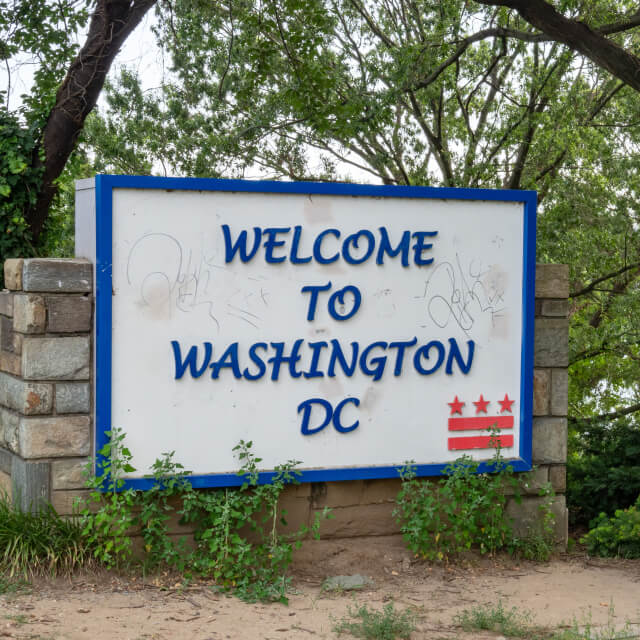
Freeway Insurance provides several convenient ways for Washington, D.C. drivers to secure coverage without delays. You can request a free online quote in minutes, visit a nearby office for in-person assistance, or call 800-777-5620 to speak directly with a licensed agent.
Whether you need help with roadside assistance, comprehensive auto coverage, or finding lower rates after a violation, Freeway Insurance serves new customers and existing policyholders alike—including English- and Spanish-speaking drivers with non-standard profiles. Start comparing today and save money on the protection you need.
Frequently Asked Questions About Car Insurance in Washington, D.C.
How Much Does Car Insurance Cost in Washington, D.C.?
Costs vary based on driving record, ZIP code, and vehicle type, but many D.C. drivers pay above the national average. Full coverage generally costs more than minimum liability but offers broader protection. Freeway Insurance provides fast, personalized quotes so you can see real numbers.
What Is the Minimum Car Insurance Required to Drive Legally in Washington, D.C.?
Drivers must carry bodily injury and property damage liability ($25k/$50k/$10k) plus uninsured motorist coverage ($25k/$50k bodily injury, $5k property). These limits satisfy state requirements but may not cover serious accidents.
Why Are Car Insurance Rates Higher in Washington, D.C.?
Dense population, heavy commuter traffic, higher repair and medical costs, and elevated claim frequencies all contribute. Neighborhood risk modeling and uninsured driver presence also influence rates.
How Can I Lower My Car Insurance Rates in Washington, D.C.?
- Maintain a clean driving record.
- Ask about all available discounts.
- Consider adjusting your deductible.
- Bundle auto with renters or homeowners coverage.
- Compare multiple quotes annually with Freeway Insurance.
By clicking Start Quote, I agree to the Privacy Policy and Terms of Use, which affect my rights.
By clicking Start Quote, I agree to the Privacy Policy and Terms of Use, which affect my rights.