
Show Digital Proof of Insurance Coverage with Your Phone
-


- 3+ Years of Insurance Content Experience
- Background in Journalism, Editorial Editing, and Academic Writing
Andrea Perez is a bilingual content writer at Confie, the parent company of Freeway Insurance, where she develops educational and marketing content for multiple insurance…
As of late 2024, 49 states plus Washington, D.C. generally accept some form of electronic proof of auto insurance, with New Mexico as the main exception and Massachusetts handling proof through registration documents.
You can usually show proof of insurance on your phone during a traffic stop or after an accident, but keeping a paper copy in your glove box as backup is still a smart move. Digital proof can be an app-based ID card, a PDF, or a clear screenshot stored on your portable electronic device, depending on state law and your insurance company.
If your phone dies or you can’t access your insurance app, you may receive a citation that could require additional hassle to dismiss later.
At Freeway Insurance, we make getting protected simple and affordable. We also make sure you have the tools to prove you’re covered whenever you need to. Let’s walk through everything you need to know about digital proof of insurance, from legality to best practices.
What Is Digital Proof of Insurance?
Digital proof of insurance is simply an electronic version of your car insurance card stored or displayed on a smartphone or other mobile device. Instead of carrying a paper insurance card, you can access your coverage information right from your phone whenever a law enforcement officer or another driver needs to see it.
This digital version usually comes in one of these formats:
- Mobile app ID cards from your insurance company
- Downloadable PDFs emailed after you purchase or renew your policy
- Screenshots or saved images that mirror the information on a traditional paper card
The typical data displayed on your electronic insurance card includes:
| Information | Example |
| Insured’s name | John Smith |
| Vehicle details | 2022 Honda Accord (VIN, year, make, model) |
| Policy number | POL-123456789 |
| Effective dates | 01/01/2024 – 01/01/2025 |
| Insurer contact info | 1-800-XXX-XXXX |
Digital proof satisfies the same legal requirements as carrying a physical ID card while driving in states where it’s permitted by law. Freeway Insurance customers can generally get both digital documents for mobile use and printed insurance cards for glove box backup.
Is Digital Proof of Insurance Legal?
Yes, in most U.S. states it is legal to show proof of insurance on your phone. However, rules can vary and may change, so it’s always wise to verify current requirements.
As of late 2024, 49 states and Washington, D.C. have laws or regulations allowing some form of electronic proof of insurance during traffic stops or vehicle registration. New Mexico remains a notable exception without a clear statute authorizing digital proof. Massachusetts handles proof of auto liability coverage through registration documents, so drivers there typically don’t use separate digital insurance id cards.
Even where digital proof is accepted, a police officer has discretion at roadside stops. Some situations, like court hearings or DMV visits, may still prefer or require printed proof. Before relying solely on your phone, confirm current requirements with your state’s Department of Motor Vehicles or Department of Insurance, especially if you recently moved or frequently drive across state lines.
Digital Insurance Laws by State
Nearly all states recognize electronic proof of insurance, but a few nuances exist. Here’s a quick summary:
- 49 states plus Washington, D.C. accept some form of electronic proof
- New Mexico lacks a specific law clearly authorizing electronic proof, so drivers should keep paper cards available
- Massachusetts ties coverage to the vehicle’s registration, displaying proof differently than a standard insurance card
The table below provides a state-by-state overview. Keep in mind that laws can change, and this information is for general reference only, not legal advice.
| State | Accepts Digital Proof? | Notes |
| Alabama | Yes | |
| Alaska | Yes | |
| Arizona | Yes | |
| Arkansas | Yes | |
| California | Yes | |
| Colorado | Yes | |
| Connecticut | Yes | |
| Delaware | Yes | |
| District of Columbia | Yes | |
| Florida | Yes | |
| Georgia | Yes | |
| Hawaii | Yes | |
| Idaho | Yes | |
| Illinois | Yes | |
| Indiana | Yes | |
| Iowa | Yes | |
| Kansas | Yes | |
| Kentucky | Yes | |
| Louisiana | Yes | |
| Maine | Yes | |
| Maryland | Yes | |
| Massachusetts | Special | Proof shown via registration |
| Michigan | Yes | |
| Minnesota | Yes | |
| Mississippi | Yes | |
| Missouri | Yes | |
| Montana | Yes | |
| Nebraska | Yes | |
| Nevada | Yes | |
| New Hampshire | Yes | |
| New Jersey | Yes | |
| New Mexico | No | No explicit statute; carry paper |
| New York | Yes | |
| North Carolina | Yes | |
| North Dakota | Yes | |
| Ohio | Yes | |
| Oklahoma | Yes | |
| Oregon | Yes | |
| Pennsylvania | Yes | |
| Rhode Island | Yes | |
| South Carolina | Yes | |
| South Dakota | Yes | |
| Tennessee | Yes | |
| Texas | Yes | |
| Utah | Yes | |
| Vermont | Yes | |
| Virginia | Yes | |
| Washington | Yes | |
| West Virginia | Yes | |
| Wisconsin | Yes | |
| Wyoming | Yes |
Laws may change. Consult your state DMV or Department of Insurance for current requirements.
How Digital Proof of Insurance Works on Your Phone
There are several ways drivers can show proof of insurance on a smartphone. The most common methods include:
- Insurance app proof of coverage: Download your insurer’s mobile app, log into your account, and access your digital id card directly.
- Downloaded or emailed PDFs: Save the electronic insurance card sent by your insurance company to your phone’s files.
- Mobile wallet versions: Some insurers support adding your card to Apple Wallet or Google Wallet for quick access.
- Screenshots: A clear image of your insurance card saved to your device.
Many insurers, including Freeway Insurance’s carrier partners, let you log in to an app to display a live, up-to-date policy ID card that updates automatically after policy changes or renewals. This ensures you always have the correct vehicle and coverage information displayed.
Some states and officers accept a screenshot of your card, but others may prefer a live, in-app display. Check with your local authorities if you’re unsure.
Best practices for organization:
- Save your card to your phone’s files or wallet
- Name the file clearly (e.g., “Auto-Insurance-Card-Policy-1234”)
- Check expiration dates before long trips
- Keep both online and offline versions handy
Benefits Of Keeping Your Insurance Card on Your Phone
Having your insurance card on your phone offers real convenience, especially during traffic stops, accidents, and emergencies. Here’s why it matters:
- 24/7 access to your insurance card even if you’re not near your vehicle or glove box
- Reduced risk of losing, damaging, or forgetting a paper card
- Faster resolution during minor traffic stops where proof may avert or reduce a citation
- Easier sharing of details after an accident by having all information in one place on your phone
For families with multiple drivers or vehicles, digital proof is especially useful. Each driver can carry coverage info on their own device without worrying about who has the paper copy.
For Freeway Insurance customers, digital access can be particularly helpful for non-standard or high-risk policies where proof may be requested more frequently, such as after SR-22 filings or repeated traffic stops.
Privacy and Safety When Showing Proof of Insurance on Your Smartphone
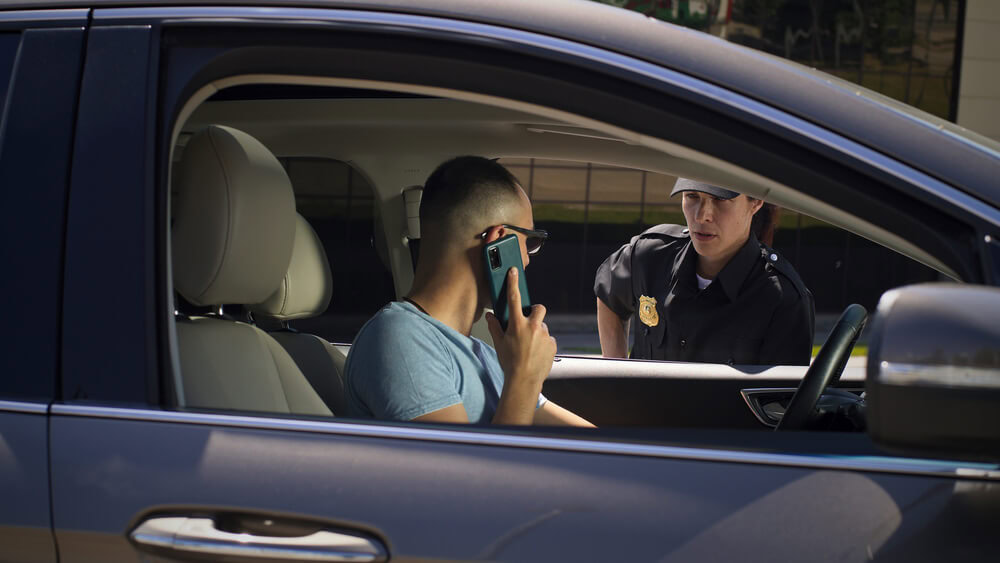
It’s natural to have concerns about handing your phone to police, protecting personal data, and avoiding unauthorized access to messages, photos, or apps.
Some states include privacy protections in their digital proof laws that limit officers to viewing only the insurance card screen. However, you shouldn’t assume this is always the case without checking local statutes.
Practical tips for protecting your privacy:
- Keep the phone in your hand and hold it where an officer can read the details without taking your device
- Use screen-locking features like Guided Access (iPhone) or screen pinning (Android) to lock the display to your insurance card screen during a traffic stop
- Turn off lock screen notifications or sensitive pop-ups before showing your phone
In many jurisdictions, drivers remain responsible for any damage to their phone if they hand it over, so keeping a physical backup card is a smart precaution.
A few simple habits can make digital proof more reliable and easier to use when it matters most:
- Save at least one offline copy (PDF or screenshot) of your insurance card in case you can’t access the insurer’s app
- Update your stored card after every renewal or coverage change and delete outdated versions to avoid confusion
- Label files with the current policy term (e.g., “Auto-Card-2024-2025”) to quickly confirm validity
- Store your insurer’s claims and customer service numbers alongside the card for quick access after an accident
- Always keep a physical backup card in the glove box, particularly if you drive through New Mexico or other areas where electronic proof may not be explicitly protected by law
This section provides general information, not legal advice about search and seizure or digital privacy rights.
What To Expect During a Traffic Stop or Accident
Picture this: you see flashing lights in your rearview mirror, and your heart rate picks up. You pull over, and the officer approaches your window. Here’s what typically happens:
At a traffic stop:
- The officer requests your license, registration, and proof of insurance
- You unlock your phone, open your insurance app or digital file, and display your electronic insurance card
- The officer visually confirms your insurance coverage or writes down policy details
- In some cases, they may verify coverage electronically from their vehicle
After an accident:
- You and the other driver exchange names, contact info, insurance company names, and policy numbers
- You can show your digital insurance card and let the other driver photograph it with their phone
- If appropriate, you can text or email a copy of your card
- Document the scene with photos, location, time, and witness details alongside sharing proof of coverage
If your phone fails due to a dead battery or no signal for app login, having a paper card in the glove box may prevent a ticket for failure to provide proof.
How To Get Digital Proof of Insurance
Freeway Insurance helps drivers get both affordable coverage and fast access to valid proof of insurance, including digital options.
Getting coverage is simple:
- Get a free quote online, by phone, or at a local office
- Choose coverage limits that meet state minimums or higher protection levels as needed
- Complete your purchase and receive confirmation along with proof-of-insurance documents
Obtaining your digital proof:
- Download policy documents from the customer portal or email
- Save the electronic insurance card as a PDF or image to your phone
- Print a physical card for the vehicle while maintaining a mobile version on your phone
Ready to get covered with Freeway Insurance?
We work with customers who may have accidents, tickets, or other non-standard driving histories. Having quick, reliable proof of insurance can be especially important in those situations.
Call 800-777-5620, visit our website or stop by a nearby office to get a quote and your digital proof of insurance today.
FAQs About Digital Proof of Insurance
Do All States Accept Electronic Proof of Insurance?
Nearly all states and Washington, D.C. now accept some form of electronic proof of auto insurance during traffic stops or registration, but a few exceptions exist. As of the most recent update, New Mexico does not have a clear statute explicitly authorizing digital proof, and Massachusetts relies on registration documents instead of a traditional insurance card. Verify current rules with your state’s DMV or Department of Insurance before relying solely on a mobile insurance card, especially for court appearances.
What Happens If Your Phone Is Dead During a Traffic Stop?
If you cannot show any proof of insurance because your phone is dead and you have no paper card, you may receive a citation or be treated as if you have no proof at the time of the stop. Some states allow drivers to have a ticket dismissed later by providing proof that coverage was active, but this may still involve court visits, fees, or administrative hassles. Always keep a printed insurance card in your vehicle as a backup.
Is A Screenshot of My Insurance Card Acceptable?
Many officers and states accept a clear screenshot that shows all required details, but some laws are written around “electronic images” without specifying screenshots versus live app displays. Keep both a live method (via insurer app or PDF) and at least one recent screenshot saved offline for quick access. Check with your Freeway Insurance agent and local authorities if you want confirmation that a screenshot alone is sufficient where you live.
Can Police Take Your Phone to Verify Insurance?
Procedures differ by jurisdiction, and some states have rules stating that showing electronic proof does not grant general access to the rest of your device. Hold the phone yourself whenever possible and use screen-lock or app-pinning features so only the insurance card is visible. For detailed questions about police authority to search a phone, speak with a qualified attorney, as this article is not legal advice.
Do You Still Need a Physical Insurance Card If You Have Digital Proof?
While digital proof is increasingly accepted, a physical card remains a smart backup and may still be expected in certain settings, such as some courts, DMVs, or states without explicit electronic-proof laws. Keep at least one printed card in the glove box of every insured vehicle, particularly when traveling through multiple states. Freeway Insurance can help you obtain both digital and printed proof quickly after binding a new policy or renewing coverage.
What’s The Best Way to Store Proof of Insurance on Your Phone?
Create a dedicated folder for insurance documents and save your card as both a PDF and a screenshot. Add it to Apple Wallet or Google Wallet if your insurer supports it. Make sure you can access it offline in case you don’t have cell service during a traffic stop. Update your saved files immediately after any policy renewal or change.
What Happens If You Can’t Show Proof of Insurance at All?
Driving without proof of insurance, even if you’re actually insured, can result in fines ranging from $100 to over $1,000 depending on your state. You may also face license suspension, vehicle impoundment, or additional fees to get your car back. Having both digital and paper proof readily available helps you avoid these costly consequences.