How Long Does a Car Insurance Claim Take?
-


- 10+ Years of Marketing and Content Writing Experience
- Bachelor of Arts in Marketing
Ashley Walrath is a Content Writer at Confie, the parent company of Freeway Insurance, where she creates educational content that helps consumers better understand insurance and make informed coverage decisions. She develops consumer…
-
- 13 Years of Insurance Industry and Content Experience
- B.S. in Applied Technology and Performance Improvement, University of North Texas
Rose Carter is an insurance content strategist and marketing executive with 13 years of experience developing consumer-focused insurance education and digital…
-
- 8 Years of Insurance Experience
- Alabama Licensed Insurance Agent
Taylor is a licensed insurance professional with eight years of experience in the Alabama insurance market, specializing in personal lines …

After a car accident, you probably want to know how soon your insurance company will resolve your claim and help you get back on the road. Some car insurance claims are resolved within days, while others take weeks or months.
The timeline depends on the extent of the damage, whether anyone was injured, and how much investigation is needed. A minor accident with clear responsibility may move faster than a collision involving multiple drivers or disputed fault.
Here’s what to expect during the claims process, what can cause delays, and how to keep your claim moving.
Key Takeaways
- There is no universal timeline for resolving a car insurance claim. Straightforward claims may take days or weeks, while complicated cases can take months or longer.
- Property-damage claims generally move faster than those involving injuries, theft, disputed fault, or total losses.
- The claims process typically includes reporting the loss, investigation, damage assessment, coverage review, settlement, and payment.
- Providing complete documentation and responding promptly to your adjuster can help prevent avoidable delays.
- State insurance regulations and policy terms can affect how insurance companys process claims.
How Long Does a Car Insurance Claim Usually Take?
A straightforward property-damage claim may be resolved within several days or weeks. More complicated claims involving injuries, multiple vehicles, or disagreements over responsibility can take several months or longer.
For example, a minor collision with clear liability and an available repair estimate may move through the process relatively quickly. An accident involving several drivers and conflicting accounts may require additional investigation.
It’s also important to distinguish between claim resolution and vehicle repair time. An insurance company may approve payment before repairs are finished, while delays at a repair shop can extend the time until your vehicle is ready.
If you’re unfamiliar with the process, Freeway’s guide to auto insurance claims explains what happens after an accident.
Do States Have Deadlines for Processing Car Insurance Claims?
Yes. State insurance laws may establish deadlines for insurance companys to acknowledge claims, investigate losses, make coverage decisions, and issue payments.
For example, California generally requires insurance companys to acknowledge claims within 15 calendar days and accept or deny them within 40 calendar days after receiving proof of claim, subject to applicable exceptions. Texas has different requirements, including deadlines for acknowledging claims, making decisions, and issuing payments under a driver’s own policy.
However, these deadlines don’t guarantee that every claim will be fully resolved within a specific number of days. Additional investigations, disputed liability, injuries, and other circumstances may affect the timeline.
Check with your state’s insurance department for the requirements that apply to your claim.
Key Stages in the Car Insurance Claims Process
Most auto insurance claims follow a similar process, although the order and timing of individual steps may vary.
| Stage | What Happens |
| Reporting the claim | You notify the insurance company and provide accident details. |
| Claim assignment | The insurance company assigns a claims representative or adjuster. |
| Investigation | The insurance company reviews evidence and determines liability when necessary. |
| Damage assessment | The adjuster inspects vehicle damage and estimates repair costs. |
| Coverage determination | The insurance company reviews applicable policy coverage, limits, and deductibles. |
| Repair or total-loss evaluation | The insurance company determines whether the vehicle should be repaired or treated as a total loss. |
| Negotiation, if applicable | The parties may discuss disputed estimates, valuations, or settlement amounts. |
| Payment or closure | The insurance company issues applicable payment and closes the claim when appropriate. |
Some stages may happen at the same time. For example, an adjuster may review accident information while a repair shop prepares an estimate.
Stage 1: Reporting Your Car Insurance Claim
The claims process begins when you notify your insurance company about the loss.
Depending on your insurance company, you may be able to report the accident by phone, through a website, or using a mobile app.
You will typically need information such as:
- The date, time, and location of the accident
- Contact and insurance information for the drivers involved
- Photos of the vehicle damage
- A description of what happened
- A police report number, if available
Providing accurate information from the beginning can reduce requests for additional documentation.
You should report the accident promptly and follow your policy’s notification requirements.
For more information about starting the process, read Freeway’s guide on how to file a car insurance claim.
Stage 2: Assignment to an Insurance Adjuster
After receiving your claim, the insurance company typically assigns a claims representative or adjuster to review the case.
The adjuster may contact you to confirm accident details, request documents, explain the next steps, or discuss the coverage that may apply.
How quickly this happens depends on the insurance company’s procedures, claim volume, and complexity of the loss. Large storms or other events that generate many claims can also affect response times.
If you haven’t received an update, contact your insurance company and ask who is handling your claim and when you can expect the next step.
Stage 3: Investigation and Liability Determination
During the investigation, the insurance company reviews the circumstances surrounding the accident.
Depending on the claim, this may involve:
- Reviewing police or accident reports
- Examining photos and available video
- Speaking with drivers or witnesses
- Comparing statements from the parties involved
- Evaluating vehicle damage and other evidence
When responsibility is clear and the necessary information is available, the investigation may be relatively straightforward.
However, disputed liability can extend the process. If drivers provide conflicting accounts or several vehicles are involved, the insurance company may need additional evidence before reaching a decision.
Claims involving injuries may also require medical records and other supporting documentation.
Stage 4: Vehicle Inspection and Damage Estimate
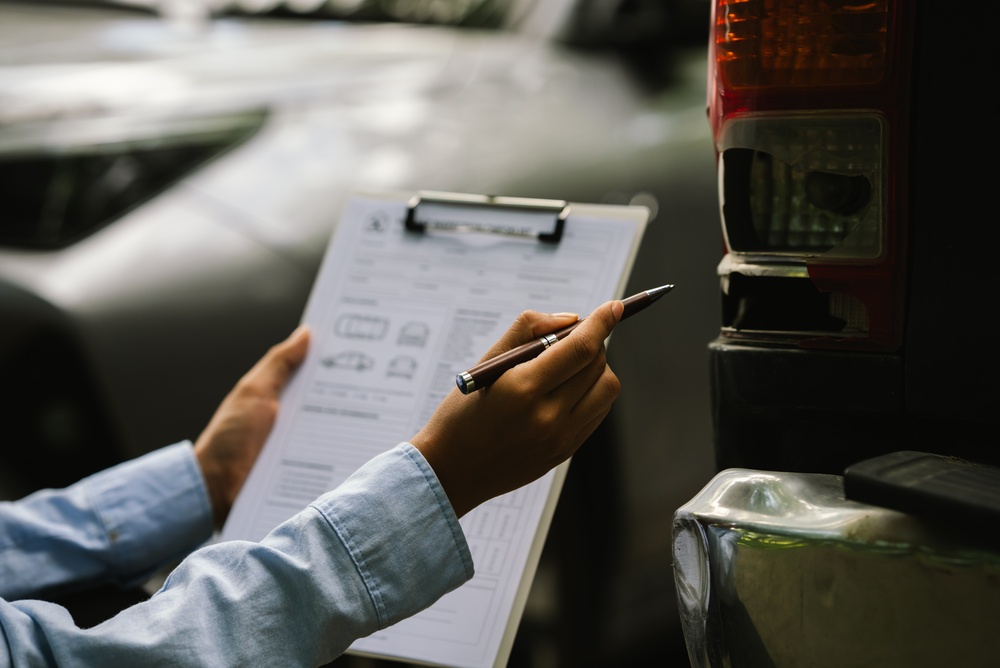
After reviewing the accident, the insurance company may need to inspect the vehicle and estimate the cost of repairs.
Depending on the insurance company and the type of damage, an inspection may involve:
- Submitting photos through an online claims system
- Visiting an approved inspection location
- Having an adjuster inspect the vehicle
- Obtaining an estimate from a repair shop
Minor visible damage may be easier to evaluate than extensive structural or mechanical damage.
Sometimes, a repair shop discovers additional accident-related damage after work begins. The shop may submit a supplemental estimate for the insurance company to review, which can extend the process.
If repair costs approach the vehicle’s value, the insurance company may also need to determine whether the car qualifies as a total loss under applicable rules.
Stage 5: Coverage Review and Claim Decision
Before approving payment, the insurance company must determine whether the loss is covered under the applicable policy.
The review may include:
- Whether the policy was active when the accident occurred
- Which coverage applies to the loss
- Applicable deductibles and coverage limits
- Any relevant exclusions or policy conditions
- Whether additional information is needed
For example, collision coverage generally helps pay for covered damage to your vehicle resulting from a collision, subject to policy terms.
Comprehensive coverage generally applies to covered non-collision losses, such as theft, vandalism, or certain weather-related damage.
The coverage review may take longer if the insurance company needs additional documentation or must investigate whether the circumstances fall within the policy’s terms.
You can review Freeway’s guide on how to read and understand your auto insurance policy to learn more about coverage limits, deductibles, and exclusions.
Stage 6: Repair, Total-Loss Evaluation, and Payment
Once the insurance company has reviewed the claim and determined the applicable coverage, the next steps depend on whether the vehicle can be repaired or is considered a total loss.
If the vehicle can be repaired, the insurance company may approve a repair estimate and arrange payment according to the policy and claim circumstances.
The time needed to complete repairs depends on the repair shop’s availability, the extent of the damage, and whether replacement parts are available.
If the vehicle is declared a total loss, the insurance company generally determines its actual cash value or another applicable settlement value under the policy and state rules.
The total-loss process may require additional documentation, including vehicle ownership or lienholder information.
If you disagree with a repair estimate or vehicle valuation, you may be able to request a review or provide additional supporting information. Disputes can extend the settlement process.
Payment may be issued to you, a repair facility, a lienholder, or another appropriate party, depending on the circumstances.
Why Some Car Insurance Claims Move Faster Than Others
The type of claim can significantly affect how long it takes to reach a resolution.
| Claim Type | Why the Timeline May Differ |
| Minor property damage | Clear liability and limited damage may make investigation and estimating simpler. |
| Multi-vehicle accident | Several drivers, insurance companys, or conflicting statements may require additional investigation. |
| Injury claim | Medical treatment, documentation, and settlement discussions may take considerable time. |
| Disputed-liability claim | The insurance company may need additional evidence before determining responsibility. |
| Theft claim | Police involvement, recovery efforts, and policy conditions may affect processing. |
| Total-loss claim | Vehicle valuation, ownership documents, and lienholder coordination may add steps. |
Property damage and injury claims from the same accident may be resolved separately. For example, vehicle repairs may be approved while medical treatment and injury-related expenses are still being evaluated.
Factors That Can Speed Up or Slow Down Your Claim
Some delays are outside your control, but others can be reduced through timely communication and complete documentation.
Factors Outside Your Control
Several circumstances may affect how quickly your insurance company processes the claim:
- Claim complexity: Serious accidents or disputed liability often require additional investigation.
- Repair shop availability: Busy shops or delays obtaining parts can extend repair time.
- Multiple insurance companys: Coordination between insurance companies can add steps.
- Medical treatment: Injury claims may remain open while medical expenses and recovery are evaluated.
- Claim volume: Major storms and other widespread events can increase insurance company workloads.
Steps You Can Take to Avoid Delays
Although you can’t guarantee a faster settlement, you can help keep the process moving by:
- Reporting the loss promptly. Provide the necessary accident details and follow your insurance company’s reporting instructions.
- Submitting complete documentation. Include clear photos, available reports, and other requested information.
- Responding to your adjuster. Return calls and provide additional documents when requested.
- Keeping records. Save claim numbers, estimates, emails, and notes from conversations.
- Following up on outstanding steps. Ask your adjuster what information is still needed and when you can expect another update.
If the claim appears to be taking longer than expected, ask for a status update and an explanation of any unresolved issues.
How Freeway Insurance Can Help You With Auto Insurance Claims
Freeway Insurance agents can help you compare auto insurance policies and understand important coverage details, including deductibles, liability limits, and optional protections.
While insurance companys handle claim investigations and settlement decisions, Freeway can help customers identify the appropriate carrier’s contact information.
Whether you’re reviewing your current coverage or shopping for a new policy, Freeway can help you compare available options.
Get started with Freeway Insurance. Compare car insurance quotes online, call 800-777-5620, or visit a Freeway Insurance office near you to speak with a licensed agent.
FAQs About Car Insurance Claim Timelines
Can My Car Insurance Claim Be Settled Before Repairs Are Finished?
Yes. Some insurance companys issue payment based on an approved repair estimate before the work is complete. If additional accident-related damage is discovered during repairs, the repair shop may submit a supplemental estimate for review. Payment procedures depend on the insurance company, policy, and claim circumstances.
Why Is My Injury Claim Still Open After My Car Was Already Repaired?
Property damage and injury claims may be evaluated separately. Vehicle repairs can be completed while medical treatment or injury-related documentation remains outstanding. The insurance company may need additional information about medical expenses, lost income, or other damages before resolving the injury portion of the claim.
Can I Speed Up My Claim by Using a Preferred Repair Shop?
Possibly. Some insurance companys have repair networks that simplify estimates, communication, and payment arrangements. However, using a preferred shop doesn’t guarantee faster repairs or settlement. Your ability to choose a repair facility and any applicable restrictions depend on state law and policy terms.
What Happens if New Damage Appears After My Claim Is Closed?
Contact your insurance company if you discover additional damage that may be related to the original accident. The company may request photos, an updated repair estimate, or other documentation. Whether the claim can be reopened or additional payment approved depends on the circumstances and applicable policy terms.
Does Filing My Car Insurance Claim Online Make It Faster?
Online filing may make it easier to submit accident details, photos, and documents quickly. However, it doesn’t guarantee a faster settlement. The overall timeline still depends on the investigation, coverage review, damage assessment, and any other steps necessary to resolve the claim.