
Martinsville Speedway: Why NASCAR’s Shortest Track Is One of Its Toughest Challenges
-


- 3+ Years of Insurance Content Experience
- Background in Journalism, Editorial Editing, and Academic Writing
Andrea Perez is a bilingual content writer at Confie, the parent company of Freeway Insurance, where she develops educational and marketing content for multiple insurance…
-
- 13+ Years of Editorial and Content Strategy Experience
- B.A. in English, Creative Writing, Colorado State University
Brandon Farestad is the AI Content and Editorial Manager at Confie, the parent company of Freeway Insurance, where he leads editorial strategy, content operations, and publishing standards…
-
- 26 Years of Insurance Experience
- California Licensed Insurance Agent (LIC#0D06734)
Anthony M. Brambila is a licensed California insurance agent with 26 years of experience helping customers navigate their coverage options. He specializes in personal lines…
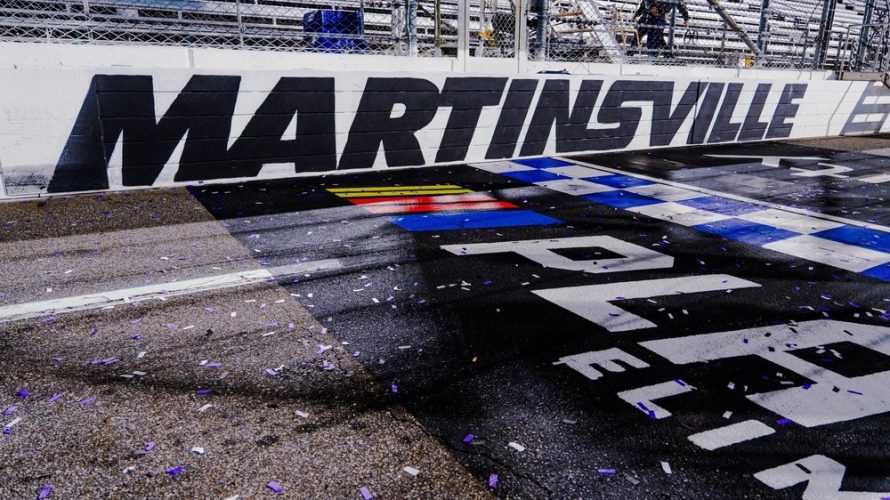
At Martinsville Speedway, there’s barely time to breathe. A driver charges down the straightaway, stands on the brakes, squeezes through a tight corner, gets back on the gas, and a few seconds later does it all over again.
The track is only 0.526 miles long, the shortest on the NASCAR Cup Series schedule. Yet those 0.526 miles can feel enormous when dozens of cars are fighting for the same narrow piece of pavement. Traffic arrives quickly. Bumpers meet. Brakes get hot. Patience gets tested.
That’s why the Xfinity 500 on November 1, 2026, is such a great late-season test. Martinsville is the next-to-last Cup race of the year, with the championship finale at Homestead-Miami one week later. At this point in the season, every position matters, and Martinsville has a habit of making drivers work for every one of them.
Why is Martinsville Speedway so difficult?
On a map, Martinsville almost looks too simple: two straightaways connected by two tight turns. From above, it resembles a paperclip, which explains the nickname.
The official Martinsville Speedway track history lists the oval at 0.526 miles with 12 degrees of banking in the corners. That compact layout means the next braking zone is always coming, and clean air can disappear fast once the leaders catch traffic.
A driver can be fighting for position while watching a slower car ahead, listening to the spotter, protecting the brakes, and deciding whether the driver behind is close enough to make a move. There isn’t much downtime.
The paperclip layout keeps drivers busy
Martinsville’s shape creates a rhythm that sounds easy until you imagine repeating it hundreds of times: accelerate, brake hard, turn, get back on the throttle, and repeat.
The corners are tight and relatively flat, so drivers have to slow the car dramatically. Brake a little too late and the car can slide wide. Brake too early and the door opens for someone to dive underneath.
Then comes the exit. Getting back to the throttle cleanly matters because even a small loss of momentum can make a driver vulnerable by the next turn. At Martinsville, tiny mistakes have a way of becoming somebody else’s opportunity.
The shortest track creates a lot of traffic
On a bigger oval, a driver may find some open space and settle into a rhythm. Martinsville doesn’t offer much of that.
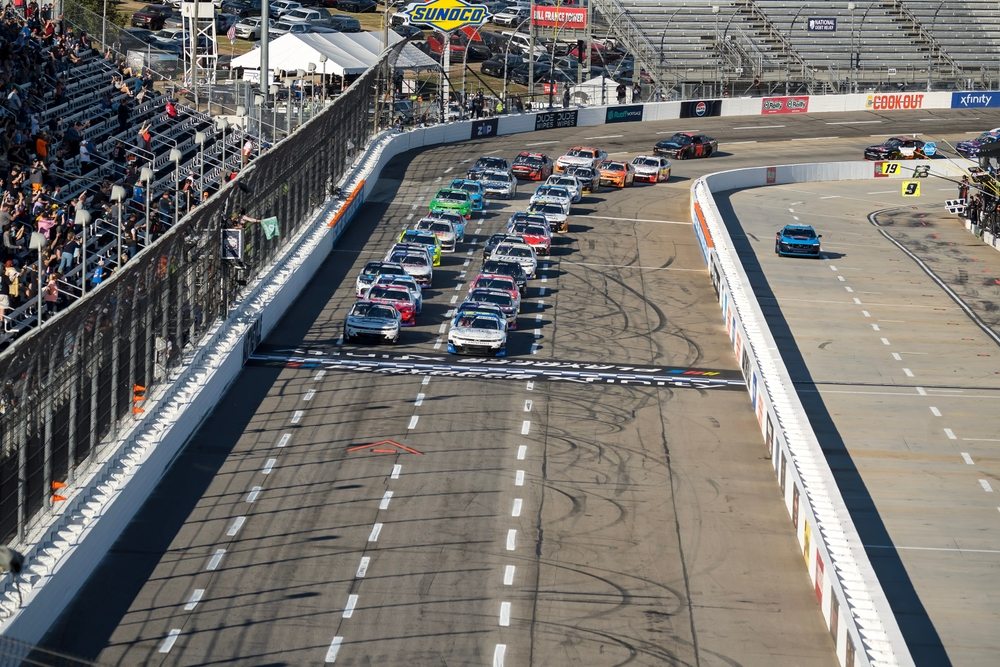
Because a lap goes by so quickly, leaders can catch the back of the field early. Suddenly, a battle for the lead is also a battle through lapped traffic. The driver being passed may be fighting to stay on the lead lap, so nobody is eager to simply move aside.
That’s part of Martinsville’s charm for fans. There can be several fights happening in the same camera shot, and the next one is never far away.
Brakes take a beating
If there’s one part of the car you don’t want to lose confidence in at Martinsville, it’s the brakes.
Drivers have to slow hard at both ends of the track, lap after lap. That creates heat and puts a premium on brake cooling, durability, and feel. A car that stops exactly where the driver expects early in the race may not feel the same hundreds of laps later.
And if a driver has to start braking earlier, rivals notice. At a place where passing opportunities are already precious, giving someone an opening into the corner can be costly.
The trick is being quick without using everything up too soon. Martinsville rewards drivers who can think about lap 400 while they’re still racing through lap 100.
Why racing at Martinsville gets so intense
Martinsville doesn’t give drivers much room to reset. The tight layout keeps cars close, passing opportunities are limited, and one small mistake can quickly turn into contact, lost positions, or a frustrated rival.
A little contact can turn into a long memory
Martinsville is short-track racing, and short-track racing gets crowded. Cars run door to door, drivers fight for the inside line, and sometimes a bumper becomes part of the conversation.
A small nudge may be enough to move a rival up the track and open a lane. Push too hard, though, and the result can be damaged bodywork, a cut tire, a spin, or a very unhappy driver who will still be nearby 50 laps later.
That’s where patience matters. A driver has to know when a gap is really there and when forcing the issue will create a bigger problem. Martinsville can reward aggression, but it has a long memory.
Passing takes more than a fast car
Being quicker doesn’t mean you can simply drive around someone. The racing groove can be tight, and a driver may spend lap after lap staring at the same rear bumper.
A pass can start with a better exit from the previous turn, a slightly later braking point, a mistake by the car ahead, or a well-timed restart. Sometimes the best move is waiting a few more laps rather than turning one battle into a wreck.
That constant judgment is part of what separates the best short-track racers. They’re not only asking, “Can I make this move?” They’re deciding whether this is the right moment to try it.
Pit strategy can flip the race
Martinsville can be difficult to pass on, which makes track position extremely valuable. That puts extra pressure on pit road.
A quick stop can gain positions without a single on-track pass. A slow one can send a fast car back into traffic, where recovering those spots may take a long time.
The 2026 spring race gave fans a perfect example. Chase Elliott’s team short-pitted on lap 261, using an aggressive strategy to gain track position. Elliott eventually took the lead and held off Denny Hamlin for the win, even though Hamlin had led 292 laps. At Martinsville, the fastest car doesn’t always get the grandfather clock. The right call at the right moment can change everything.
Martinsville tests a driver’s head, too
The physical repetition is only part of the challenge. For hundreds of laps, drivers are processing traffic, brake feel, tire grip, radio calls, pit strategy, and the cars around them.
Then there’s the emotional side. If somebody moves you out of the groove on lap 80, you may still be racing that same person on lap 380. Staying calm enough to make the next smart decision is part of the job.
That mix of pressure and close racing is one reason Martinsville has produced so many memorable finishes. There simply isn’t much room, physically or mentally, for a driver to switch off.
Why the 2026 Xfinity 500 carries so much pressure
The 2026 NASCAR Cup Series schedule puts the Xfinity 500 at Martinsville on Sunday, November 1, at 2 p.m. ET. The championship race at Homestead-Miami follows on November 8.
That timing matters even more under NASCAR’s 2026 championship format. The sport returned to a 10-race Chase with 16 drivers, and the title goes to the eligible driver who finishes the season with the most points. Martinsville is no longer the old elimination race that determined a Championship 4, but with only one race left afterward, a bad afternoon can still be brutal.
If you’re getting familiar with the new format, Freeway’s guide to how NASCAR seasons are structured breaks down how the season fits together.
At Martinsville, one slow pit stop, one damaged fender, or one poorly timed bump can turn into a long fight back through traffic. Put championship pressure on top of that, and 500 laps suddenly feel very short.
Martinsville has been there since NASCAR’s earliest days
The track’s history is as impressive as the racing. Martinsville opened in 1947, before NASCAR itself was founded, and it has hosted Cup Series racing every year since the division began in 1949.
The cars have changed enormously since then. The basic challenge hasn’t. Drivers still have to get a heavy stock car slowed down, turned through a tight corner, and back on the throttle better than the person beside them.
That continuity gives Martinsville a special place on the schedule. Fans aren’t only watching another race. They’re watching today’s drivers tackle a track that has tested generations of NASCAR stars.
And yes, the winner gets a grandfather clock
Martinsville doesn’t hand its winners an ordinary trophy. The famous grandfather clock has become one of NASCAR’s most recognizable prizes.
The tradition dates to the 1960s and gives a Martinsville victory its own personality. Drivers spend the afternoon surviving traffic, hot brakes, and close quarters, then get to take home a full-size working clock.
It’s unusual, unmistakable, and perfectly Martinsville.
What fans can expect at Martinsville
For spectators, the compact track means the action keeps coming back around. You can watch a battle develop, see a driver get trapped in traffic, and then watch the next restart shake up the order again.
It’s also a good track for understanding strategy. When a driver loses positions in the pits or gets stuck behind another car, you can see how difficult it is to get those spots back.
Going to your first race? Freeway’s guide to watching NASCAR live for the first time covers the basics so you can spend less time figuring things out and more time watching the action.
Freeway Insurance celebrates NASCAR at Martinsville
Martinsville is proof that a racetrack doesn’t have to be huge to create huge moments. Its tight corners, crowded racing, history, and late-season pressure make it one of the places where patience and precision matter just as much as raw speed.
Freeway Insurance is a Premier Partner of the NASCAR Cup Series and the Official Insurance Partner of NASCAR. That partnership builds on years of supporting NASCAR and Daniel Suárez, and gives Freeway another reason to celebrate tracks like Martinsville and the fans who make them special.
Off the track, Freeway can help you explore insurance options that fit your needs. You can get a quote online, visit a Freeway location, or call 800-777-5620 to speak with an agent.
Frequently asked questions about Martinsville Speedway
Why is Martinsville Speedway called the Paperclip?
From above, the track looks like a paperclip: two relatively long straightaways joined by tight turns. That simple shape creates the hard-braking, stop-and-go rhythm that makes Martinsville so demanding.
How long is Martinsville Speedway?
Martinsville measures 0.526 miles, making it the shortest track on the NASCAR Cup Series schedule. Its compact size keeps traffic close and lets the leaders catch slower cars quickly.
How many laps are in the Xfinity 500?
The 2026 Xfinity 500 is scheduled for 500 laps, or about 263 miles. The distance may sound modest compared with some Cup races, but those laps include repeated heavy braking and constant traffic.
Why are brakes so important at Martinsville?
Drivers have to slow sharply for both sets of tight turns. Doing that hundreds of times creates heat and wear, so brake performance can affect both lap time and a driver’s ability to defend a position.
Why do Martinsville winners receive a grandfather clock?
The grandfather clock is a tradition dating to the 1960s and has become one of NASCAR’s most distinctive trophies. It connects a modern Cup victory with Martinsville’s long history and the character of the region.