How Darlington Raceway Earned Its Reputation as “Too Tough to Tame”
-


- 10 Years of Content Writing Experience
- 5 Years of Insurance Content Experience
Mónica Alarcón is a bilingual Senior Copywriter at Confie, the parent company of Freeway Insurance, where she specializes in creating educational insurance…
- 13 Years of Insurance Industry and Content Experience
- B.S. in Applied Technology and Performance Improvement, University of North Texas
Rose Carter is an insurance content strategist and marketing executive with 13 years of experience developing consumer-focused insurance education and digital…
- 8 Years of Insurance Experience
- Alabama Licensed Insurance Agent
Taylor is a licensed insurance professional with eight years of experience in the Alabama insurance market, specializing in personal lines …

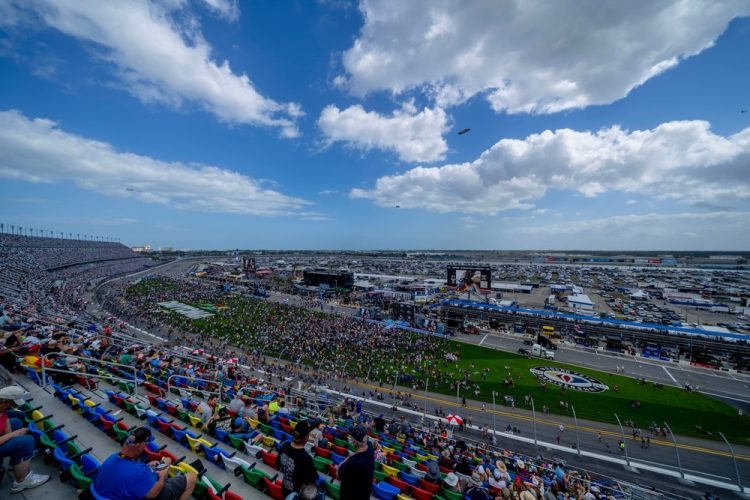
Darlington Raceway is a 1.366-mile, egg-shaped NASCAR oval in South Carolina known as “The Track Too Tough to Tame.” Its unusual layout and abrasive surface leave little room for error, especially when drivers run close to the outside wall in search of speed. At Darlington, contact with the wall is so common that it has become part of the track’s identity.
That identity is a big reason Darlington holds such a respected place on the NASCAR schedule. The two ends of the track are shaped differently, forcing teams to find a setup that works across very different corners. Tire wear also becomes a major factor as a run progresses. And then there is the famous “Darlington Stripe,” the mark left along the right side of a car after brushing the wall.
Ahead of the Cook Out Southern 500 on September 6, 2026, this guide explores what makes Darlington Raceway so challenging and why the race remains one of NASCAR’s signature events. We’ll also look at moments that shaped the track’s legacy, what fans can watch for when the Cup Series returns, and how Freeway Insurance’s NASCAR partnership connects to race weekend.
In this guide, you’ll learn:
- Why Darlington has its unusual egg-shaped layout
- How tire wear and the narrow groove change the race
- Why the Darlington Stripe has become a badge of honor
- What makes the Southern 500 one of NASCAR’s crown jewels
Why Is Darlington Called “The Track Too Tough to Tame”?
Darlington earned its nickname as “The Track Too Tough to Tame” because drivers have to manage several challenges at the same time. The two ends of the track are shaped differently, the preferred racing line is narrow, grip changes quickly as tires wear, and drivers have to decide how close they are willing to run the outside wall.
That makes patience just as important as speed. A car that handles well early in a run may become more difficult to control as the laps add up. Running close to the wall can produce faster lap times, but getting too close can damage the car or end a driver’s chances altogether. Darlington rewards drivers who can find that balance without pushing the car too hard too soon.
The Egg-Shaped Layout Was Never Part of the Original Plan
Darlington’s most recognizable feature started with a practical problem. When Harold Brasington was developing the track, landowner Sherman Ramsey asked that a minnow pond on the property be left undisturbed. Brasington adjusted the design around it, leaving one end of the oval broader and the other tighter.
The result is the track’s famous egg shape. Drivers can’t approach both ends exactly the same way, and teams can’t build a setup that’s perfect everywhere. What works through the wider turns may create a different handling problem at the tighter end. That compromise is part of what makes Darlington so different from traditional oval tracks.
For fans, the asymmetry is easy to overlook on television until a driver misses the line. Then the reason for Darlington’s reputation becomes obvious very quickly.
Why Tire Wear Changes Everything at Darlington
Darlington’s racing surface is famously abrasive, which means fresh tires can dramatically change how a car behaves. As a run continues and grip falls away, drivers have to decide how hard to push, how much tire to save, and whether track position is worth sacrificing for fresher rubber.
That creates one of Darlington’s best strategic features: Speed is temporary. A driver who looks dominant on new tires may become vulnerable later in the run, while someone who protects the car early can have more control when others begin sliding toward the wall.
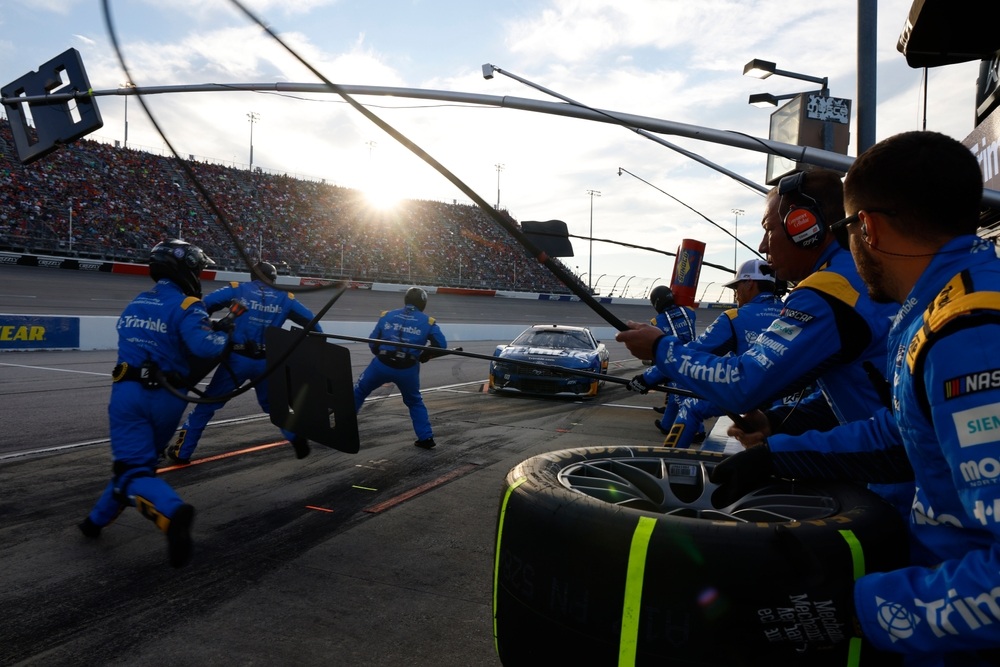
Pit strategy matters because a fresh set of tires can be valuable, but giving up position at a track where passing is difficult carries its own risk. Darlington makes teams constantly balance short-term speed against what they’ll need later in the race.
The Darlington Stripe Is a Rite of Passage
Few NASCAR traditions are as instantly recognizable as the Darlington Stripe. It’s the scrape along the right side of a car after a driver brushes the outside wall or lightly hits it while chasing the fastest possible line.
The tradition is nearly as old as the track itself. NASCAR’s official look at the 75-year history of the Darlington Stripe shows how generations of drivers have left paint on Darlington’s wall while searching for speed. In earlier eras, some competitors even reinforced the right side of the car because they expected contact.
Today, the wall is still part of the challenge. The difference between a harmless stripe and race-ending damage can be only a few inches. That’s why leaving Darlington with a marked-up right side is sometimes worn with pride. It means the driver spent the race operating close to the track’s limit and survived.
Why the Cook Out Southern 500 Is One of NASCAR’s Crown Jewels
The Cook Out Southern 500 is considered one of NASCAR’s crown jewel races because winning it carries significance beyond a typical Cup Series victory. Drivers have to conquer one of the sport’s most demanding tracks while adding their name to a race that dates back to 1950, when Johnny Mantz won NASCAR’s first 500-mile event.
The race is also closely tied to Labor Day weekend, a tradition that helped establish the race as a fixture on the NASCAR calendar. After spending several years away from that date, the race returned to Labor Day weekend in 2015. Today, its long history, challenging venue, and traditional place on the schedule all contribute to the prestige of winning at Darlington.
Southern 500 Moments That Built the Legend
Darlington’s long history includes several moments that helped shape the track’s reputation today.
1950: Johnny Mantz Wins the First Southern 500
The first Southern 500 established Darlington as something NASCAR had not seen before: a paved speedway hosting a 500-mile stock-car race. Mantz’s victory gave the event an immediate place in the sport’s history and started a Labor Day tradition that would define generations of fans.
David Pearson’s Success at Darlington
David Pearson remains the benchmark for success at Darlington with 10 Cup Series victories, more than any other driver. His dominance included a sweep of the Rebel 500 and Southern 500 in 1976. Pearson also won 105 Cup Series races during his career, second-most in NASCAR history, but his record at Darlington stands out even among those accomplishments. Few drivers were as consistently successful at a track known for being difficult to master.
2003: Craven and Busch Finish 0.002 Seconds Apart
Ricky Craven’s 2003 victory over Kurt Busch remains one of the most replayed finishes in NASCAR history. After a fierce final-lap battle in which both drivers traded contact and risked a crash, Craven won by 0.002 seconds. The finish captured Darlington perfectly with two drivers fighting for every inch on a track that leaves almost no room to spare.
2024-2025: Chase Briscoe Goes Back-to-Back
Chase Briscoe won consecutive Southern 500s in 2024 and 2025, becoming the first driver to win back-to-back editions since Greg Biffle in 2005 and 2006. In the 2025 race, Briscoe led 309 of 367 laps and still had to hold off Tyler Reddick late, winning by just 0.408 seconds.

Why Winning at Darlington Is a Badge of Honor
A win at Darlington reflects more than outright speed. Drivers have to manage tire wear, adjust to the track’s uneven layout, and race close to the outside wall without pushing too far. Doing that successfully over the course of the Southern 500 makes a victory here especially meaningful.
The Darlington Stripe has become a symbol of that challenge. A driver can brush the wall, leave a mark on the car, and still contend for the win. At Darlington, success is less about running a perfect race and more about knowing how close to the limit you can go.
What to Watch for in the 2026 Cook Out Southern 500
The Cook Out Southern 500 returns to Darlington Raceway on Sunday, September 6, 2026. The race is part of the Chase for the NASCAR Cup Series, adding even more pressure to a track that already demands patience and precision.
One of the biggest things to watch is tire strategy. Fresh tires can quickly change the running order, especially as longer runs wear down grip. Drivers will also have to decide how aggressively to use the outside line without turning a light Darlington Stripe into serious damage.
Late cautions can make those choices even tougher. Teams may have to choose between fresh tires and valuable track position, which can reshape the final laps.
Chase Briscoe is another storyline to follow after winning the Southern 500 in both 2024 and 2025. His recent success at Darlington gives fans a clear benchmark as the 2026 race unfolds.
If this is your first NASCAR event in person, Freeway’s guide to watching NASCAR live explains the basics, including pit stops, restarts, and how to follow the action throughout race day.
Freeway Insurance Celebrates One of NASCAR’s Most Historic Venues
Darlington represents the skill, resilience, and tradition that have defined NASCAR for generations. In 2026, Freeway Insurance became the fourth Premier Partner of the NASCAR Cup Series and the Official Insurance Partner of NASCAR, expanding its presence across the sport.
That relationship also includes continued support for NASCAR Cup Series driver Daniel Suárez. Celebrating Darlington ahead of the September 6 Cook Out Southern 500 is a natural fit for a partnership connected to one of NASCAR’s most historic venues.
Follow the Action With Freeway Insurance
The Cook Out Southern 500 brings together everything that makes Darlington special: history, strategy, tire management, and a track that rarely gives drivers an easy lap. Fans can also explore Freeway’s Premier Partnership with NASCAR and follow more stories from across the NASCAR circuit.
Freeway Insurance helps drivers find auto insurance coverage that fits their needs and budget. Get a free quote online, stop by a local office, or call 800-777-5620 to speak with an agent and review your coverage options.
Frequently Asked Questions About Darlington Raceway
Why Is Darlington called “The Track Too Tough to Tame”?
Darlington earned the nickname because its unusual shape, narrow preferred groove, abrasive surface, rapid tire wear, and close outside wall force drivers to manage several challenges at once. Even experienced champions can lose time or damage the car with a small mistake, especially as grip changes during a long run.
Why Is Darlington Raceway Egg-Shaped?
The shape traces back to the track’s original construction. Harold Brasington adjusted the layout so a minnow pond on the property would not be disturbed, leaving one end of the oval tighter than the other. That asymmetry remains one of Darlington’s defining challenges.
What Is a Darlington Stripe?
A Darlington Stripe is a scrape or paint mark left on the right side of a race car after it brushes the outside wall. Because drivers often run extremely close to the barrier in search of speed, collecting a stripe has become part of Darlington culture and, in some cases, a badge of honor.
Why Is the Southern 500 Considered a NASCAR Crown Jewel?
The Southern 500 combines a long history with one of NASCAR’s toughest challenges. First held in 1950 as NASCAR’s first 500-mile race, it tests drivers and teams over a demanding night at Darlington. Its traditional place on Labor Day weekend has also helped make it one of the sport’s most prestigious races.
When Is the 2026 Cook Out Southern 500?
The 2026 Cook Out Southern 500 is scheduled for Sunday, September 6, at 5:00 p.m. ET at Darlington Raceway in South Carolina. Fans should check the track’s official event page as race weekend approaches for any schedule updates or additional details.